Medical SMP, Stem Cell Hair Restoration & Skin Rejuvenation in Gangnam, Seoul · Multilingual Concierge
1:1 Personalized Care by Dr. Hyung Geon Kim, M.D., Ph.D.
en-US


Clinical Guide
Diffuse Thinning in Women: Causes and Non-Surgical Options
Diffuse Thinning in Women: Causes and Non-Surgical Options Medically reviewed by Dr. Hyung Geon Kim, M.D., Ph.D., Board-Certified Internal Medicine Specialist Hair loss in women is usually described in the…
Schedule a ConsultationDiffuse Thinning in Women: Causes and Non-Surgical Options
Medically reviewed by Dr. Hyung Geon Kim, M.D., Ph.D., Board-Certified Internal Medicine Specialist
Hair loss in women is usually described in the language of men's hair loss, which is one of the reasons it is recognized late. The pattern is different, the vocabulary is different, and the questions that matter are different.
This page is about the presentation most women actually have — thinning spread across the scalp rather than a line moving backward — and about what the options for it are before anyone mentions surgery.
What diffuse thinning looks like
The word diffuse is doing precise work. It means the loss is distributed rather than concentrated.
In practice that shows up in specific ways that women notice long before anyone else does.
The part line widens. This is the most commonly reported first sign, and it is a good one to pay attention to because it is measurable against a photograph rather than a memory.
The ponytail gets thinner. Volume in the hand is a form of measurement, and a change in it is real information even though it is not the kind of evidence anyone feels confident presenting.
Scalp becomes visible in certain light. Often overhead light, often in photographs, often before it is visible in a mirror.
What is usually preserved, at least early, is the frontal hairline. That is one of the features distinguishing this presentation from the pattern more familiar from men's hair loss, and the American Academy of Dermatology's material on female pattern hair loss describes the distinction in more detail.
Why the cause matters more here than anywhere else
This is the most important section on the page.
Diffuse thinning has more possible causes than a receding hairline does, and several of them are not permanent. The Academy's material on hair loss in women, and its broader material on the many causes of hair loss, both make the same point: what looks like one condition is a category.
The practical consequence is that a woman with diffuse thinning has a meaningfully higher chance than a man with a receding hairline of having something that responds to treatment of the underlying cause. That possibility is only available if someone looks.
There is a second distinction worth learning, because it changes the urgency and the answer. Hair shedding and hair loss are not the same process — one is hair coming out faster than usual, the other is hair not being replaced. The Academy publishes a plain-language explanation of the difference, and it is worth reading before any consultation, because the two behave differently and the description you give will be more useful if you know which you are describing.
What Return Clinic's assessment looks at
The clinic offers hair loss diagnosis and treatment as a service distinct from its cosmetic scalp work, and describes the consultation as assessing the hair-loss pattern, affected areas, scalp condition and individual treatment goals.
Its fuller description of the diagnostic consultation includes assessment of the hair-loss pattern, scalp condition, medical history, medications and treatment goals, with the doctor determining the likely cause of hair loss and whether a given approach is appropriate.
Two items on that list deserve attention from anyone with diffuse thinning specifically.
Medical history. More of the reversible causes of diffuse thinning live here than in any scalp examination.
Medications. Worth preparing rather than recalling. Bring the actual list.
The clinic also describes a personalized scalp assessment based on scalp condition, hair-loss progression and hair-root distribution. That third item — root distribution — is the one that tells you what is still present in the areas that look sparse, which is the single most useful finding for deciding what any cosmetic approach could achieve.
The order of operations
Return Clinic states that people with untreated scalp conditions, or medical causes of hair loss requiring diagnosis and treatment first, are not suitable candidates for its cosmetic scalp route. It also names unexplained sudden hair loss as a reason a patient may not be suitable until a physician has evaluated it.
Read that as a sequence rather than a rejection.
First, establish what is happening. This is not optional and it is not a delay tactic.
Then treat anything treatable. If something is contributing that can be addressed, addressing it is the step that changes the trajectory rather than the appearance.
Then, if you want to, address how it looks. This is a legitimate goal and it does not become less legitimate for coming third.
Skipping to the third step is how someone ends up with a good cosmetic outcome over an unexamined cause. For diffuse thinning specifically, where more of the possible causes are addressable, that skip costs more than it does elsewhere.
The non-surgical routes, and what each is for
Return Clinic lists several services relevant here, and they answer different questions.
Hair loss diagnosis and treatment. The starting point. Its output is an explanation, and an explanation is what makes every subsequent decision a decision rather than a guess. The clinic describes treatment as aiming to address the underlying factors contributing to hair loss and to support scalp and hair health where appropriate, with results varying by cause, severity, treatment selected and individual response, and immediate regrowth not to be expected.
Hair loss recovery care. Positioned for the earlier end, aimed at supporting the condition of existing follicles and potentially improving the appearance of hair density over time. The clinic describes it as possibly helping reduce shedding and supporting healthier-looking, fuller hair, with results varying by cause and severity.
Stem cell hair restoration. A regenerative, injectable route described as typically used alongside or after standard hair-loss diagnosis. Its specifics — source, formulation, protocol — are determined at consultation rather than published.
Scalp micropigmentation. The appearance route. It creates the impression of greater density and improved scalp coverage; it does not act on the follicles. Widened part lines appear explicitly in the clinic's stated candidacy criteria, which is the presentation this article is about.
None of those is a better version of another. They answer a different question each, and which question is yours is the thing the assessment establishes.
Why it gets noticed late
Worth naming, because the delay is near-universal and it is not carelessness.
Diffuse loss removes a little from everywhere rather than a lot from one place, so there is no edge to notice. A receding line has a position you can compare against a memory. A scalp that is uniformly slightly less dense does not.
Styling compensates too, and effectively. Women adjust parting, length and product long before they consciously register why, which means the first real signal is often that the adjustments have stopped working.
The consequence is that by the time most women raise it, the change has been running for a while. That is worth knowing for one reason only: it argues for starting the photograph series described below now rather than once you are certain, because certainty arrives late in this presentation by design.
What to prepare before a consultation
Five things, and they take an evening.
A timeline. When you first noticed, and whether it has been gradual or arrived in episodes. Episodic and gradual point in different directions.
Photographs. Same lighting, same parting, taken at intervals if you have them. If you do not, start now — a photograph taken today is the baseline for every future comparison.
Your medication list. The actual list, including anything started or stopped in the year before you noticed.
Anything else that changed. Health events, significant stress, changes in diet or weight. You are not diagnosing; you are supplying the timeline someone else will read.
Family history. On both sides.
You can send that summary ahead through the clinic's contact page. For an international patient in particular, sending it before you fly means the first appointment starts from your history rather than spending itself collecting it.
What to expect from the answer
Three honest notes about what a good consultation produces, because expectations set here prevent disappointment later.
It may name more than one thing. Diffuse thinning is frequently multifactorial, and a single cause is the exception rather than the rule.
Treatment aimed at biology is slow. Follicles run on cycles, so changes are assessed over months. That is a property of hair rather than of any particular treatment, and a clinic that promises a faster answer is describing something other than biology.
The cosmetic route can be considered in parallel. Once the medical question is settled and anything treatable is being treated, addressing the appearance is not in competition with that. The clinic's before-and-after gallery is organized by category, and the entries showing widened part lines are the ones to look at if you want a concrete sense of what that route addresses.
The presentation is the argument for looking
The point worth carrying away is specific to this presentation rather than general advice about seeing a doctor.
A receding hairline in a man has a most-likely explanation strong enough that many people are comfortable acting on it. Diffuse thinning in a woman does not have an equivalent default. Its list of possible causes is longer, more of them are addressable, and several of them are invisible on a scalp examination and only appear in a history.
That asymmetry is the whole argument. It is not that women should be more careful; it is that the same symptom carries more diagnostic information in this presentation, and acting on appearance alone discards it.
Getting the explanation costs one appointment. Not getting it costs the possibility that something that could have been treated was covered instead.
The Bottom Line
- Diffuse thinning shows as a widening part, reduced ponytail volume and scalp visible in certain light, typically with the frontal hairline preserved early.
- It has more possible causes than a receding hairline, several of them addressable, which is why establishing the cause matters more in this presentation than in any other.
- Return Clinic's diagnostic consultation assesses pattern, scalp condition, medical history, medications and treatment goals, with root distribution examined in the areas that look sparse.
- The clinic states that untreated scalp conditions, medical causes requiring diagnosis, or unexplained sudden loss make someone unsuitable for the cosmetic route until evaluated.
- Prepare a timeline, photographs, your medication list, other changes and family history; send them before you travel.
Frequently Asked Questions
What is diffuse thinning?
Hair loss distributed across the scalp rather than concentrated at a receding line. It typically shows first as a widening part, less volume in a ponytail, and scalp visible under certain light, with the frontal hairline often preserved early on.
Why does the cause matter so much here?
Because diffuse thinning has a longer list of possible causes than a receding hairline, and several of them respond to treating the underlying issue. That possibility only exists if someone establishes what is happening.
Is shedding the same as hair loss?
No. Shedding is hair coming out faster than usual; loss is hair not being replaced. They behave differently and the distinction is worth understanding before a consultation, since it changes what you should describe.
What does the clinic's consultation involve?
Assessment of the hair-loss pattern, affected areas, scalp condition, medical history, medications and treatment goals, with the doctor determining the likely cause and whether a given approach is appropriate.
Can I have the cosmetic treatment straight away?
Not if there is an untreated scalp condition, a medical cause requiring diagnosis, or unexplained sudden loss. The clinic names those as reasons a patient is not suitable until a physician has evaluated them.
What non-surgical options exist?
Diagnosis and treatment aimed at underlying factors, recovery care aimed at supporting existing follicles, a regenerative injectable route, and scalp micropigmentation for appearance. They answer different questions rather than ranking against each other.
How quickly will I see a change?
Anything aimed at the biology is assessed over months, because follicles run on growth cycles. The clinic states that immediate regrowth should not be expected from hair-loss treatment.
What should I bring?
A timeline of when it started and how it progressed, photographs in consistent lighting, your actual medication list, anything else that changed around the same time, and family history from both sides.
This article is for general informational purposes and does not constitute individualized medical advice. It is not a self-diagnosis tool. The cause of hair loss and the suitability of any treatment can only be determined through a consultation with a qualified dermatologist or other appropriately qualified clinician who has examined your scalp in person.
More Articles
Continue exploring hair restoration and skin rejuvenation insights from Return Clinic.
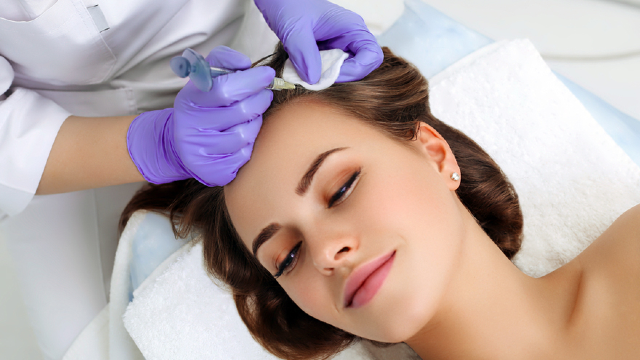
Return Clinic's Non-Surgical Options Compared by Concern
Return Clinic's Non-Surgical Options Compared by Concern Medically reviewed by Dr. Hyung Geon Kim, M.D., Ph.D., Board-Certified Internal Medicine Specialist A clinic menu is organized by what the clinic does.
Learn More
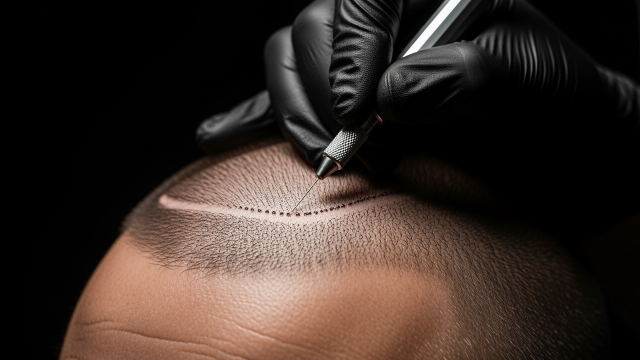
SMP scalp tattoo guide to Korea from Beijing: Guide to appointments, face-to-face consultations and return journeys
北京去韩国做SMP头皮纹发:行程、预约与术后返程规划 医学审核 Dr. Hyung Geon Kim, 医学博士,内科专科医师 要点总结 京首双城短途直飞优势 :从北京首都国际机场或北京大兴国际机场出发,直飞首尔金浦国际机场或仁川国际机场的航程仅需约两小时左右;这一便捷的交通条件使 北京去韩国做SMP 成为周末短途或小长假出行的可行选择。
Learn More

Is Scalp Micropigmentation Painful? A Straight Answer
Is Scalp Micropigmentation Painful? A Straight Answer Medically reviewed by Dr. Hyung Geon Kim, M.D., Ph.D., Board-Certified Internal Medicine Specialist Pain is near the top of what US patients ask Return…
Learn More