Medical SMP, Stem Cell Hair Restoration & Skin Rejuvenation in Gangnam, Seoul · Multilingual Concierge
1:1 Personalized Care by Dr. Hyung Geon Kim, M.D., Ph.D.
en-US

Clinical Guide
Hair Loss Recovery Care for Early-Stage Thinning Explained
Hair Loss Recovery Care for Early-Stage Thinning Explained Medically reviewed by Dr. Hyung Geon Kim, M.D., Ph.D., Board-Certified Internal Medicine Specialist There is a stage of hair loss that most treatment…
Schedule a ConsultationHair Loss Recovery Care for Early-Stage Thinning Explained
Medically reviewed by Dr. Hyung Geon Kim, M.D., Ph.D., Board-Certified Internal Medicine Specialist
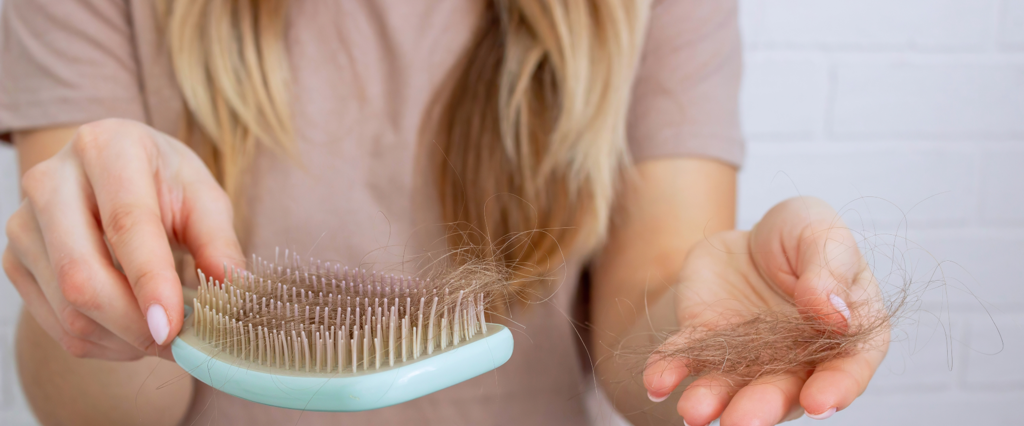
There is a stage of hair loss that most treatment writing skips past. Not the settled pattern that everyone can see, and not the dramatic shedding that sends people to a doctor quickly — the in-between, where you are finding more hair than you used to and the density has changed enough that you notice it and nobody else mentions it.
Return Clinic treats that stage as its own pathway. Hair Loss Recovery Care is described as care focused on reducing hair loss and supporting healthier hair growth and scalp condition, for people experiencing thinning, excessive shedding, or early-stage hair loss who may benefit from non-surgical care.
This page is about what that means in practice and what it honestly cannot do.
The stage this is aimed at
The clinic names the candidates as people with hair thinning, excessive shedding, or early-stage hair loss, and frames the motivation as wanting to address thinning and support restoration without immediately choosing surgical treatment.
Read the phrase "without immediately choosing" carefully. It is not positioning this as an alternative to surgery. It is positioning it as what you do at a point where the surgical question has not arrived yet, and where the aim is to act on what is happening rather than to cover what has already happened.
That distinction runs through everything below. This pathway is about the hair you still have.
Why the early stage is the useful one
Hair follicles are not a fixed quantity that depletes evenly. In pattern loss they change character over time — producing progressively finer, shorter, less pigmented hairs before they stop producing altogether. The American Academy of Dermatology's material on hair loss causes and on male pattern loss both describe this progression.
The practical implication is the one worth acting on: a follicle still producing a thin hair is in a different state from one producing nothing. Anything aimed at supporting hair works on the first category and cannot conjure the second.
Which is why "early" is doing real work in the name of this service rather than marketing work. The window in which support is meaningful is the window in which there is something to support.
What the pathway involves
The clinic sets out the sequence: consultation, scalp and hair assessment, an individualized treatment plan, treatment sessions, then follow-up monitoring.
Five steps, and the last one is the one that distinguishes this from buying a product.
Consultation and assessment. The clinic states it assesses hair-loss pattern, scalp condition, medical history and treatment needs.
An individualized plan. Built from that assessment rather than from a standard protocol.
Treatment sessions. The clinic states that the number of sessions and treatment time vary depending on scalp condition.
Follow-up monitoring. Named explicitly as part of the pathway, which matters for a treatment whose evidence arrives slowly.
Why monitoring is the substance, not the aftercare
For a treatment aimed at biology, monitoring is not an administrative step. It is how anyone finds out whether the thing is working.
The clinic is direct that results generally develop gradually and may require multiple sessions and ongoing maintenance. Its diagnostic material puts the underlying reason plainly: hair improvement is gradual because follicles naturally follow growth cycles, results may take months to become noticeable, and immediate regrowth should not be expected.
Now consider what that means for self-assessment. Over months, you see your own hair every day, in different lighting, at different lengths, in different states of cleanliness. You are the worst available instrument for detecting a slow change in it — and you are also the most motivated observer, which makes you unreliable in both directions.
Structured follow-up is what replaces that. Comparison against a recorded baseline, in consistent conditions, at intervals long enough for a growth cycle to have expressed itself.
If you take one practical instruction from this page: establish the baseline properly at the start, because you cannot reconstruct it later.
What it does not do
Three things, stated plainly, because the gap between these and what people hope for is where dissatisfaction comes from.
It does not restore hair that is gone. The aim is reducing loss and supporting healthier growth in what remains. An area with no follicles producing is not the target of this pathway.
It does not work quickly. Months, driven by the growth cycle rather than by the treatment's potency.
It is not a course you finish. The clinic states that results may require ongoing maintenance. For progressive loss, stopping generally means the underlying process continues from wherever it had reached.
The clinic's stated benefit is correspondingly measured: it may help reduce hair shedding and support healthier-looking, fuller hair, with results varying by cause and severity. That is a careful sentence and it is worth taking at face value rather than rounding up.
Who should not start here
The clinic names two groups: patients with unexplained or untreated underlying causes of hair loss, and those requiring a different specialist treatment.
Both point the same direction. Support aimed at hair in general is not a substitute for identifying why this particular hair is being lost, and some causes call for something other than supportive care.
This is worth connecting to a distinction the AAD publishes on directly: hair shedding and hair loss are different findings. Shedding that began after an identifiable trigger — an illness, a significant weight change, a stressful period, a medication change — often follows its own course. Someone in that situation may be about to commit to months of supportive treatment for a process that is already resolving.
Establishing which of the two you have is the first appointment, not this one.
Risks and recovery
Proportionate to what is involved. The clinic states that depending on the specific treatment, temporary scalp irritation, redness or discomfort may occur, and that there is generally little to no downtime for non-invasive treatments.
Preparation is following the clinic's instructions regarding scalp and hair products before treatment; aftercare is following treatment-specific scalp-care instructions and attending recommended follow-ups.
The low burden is genuinely an advantage of acting at this stage. It is also a reason to be careful: a low-burden treatment is easy to continue without ever asking whether it is achieving anything, which is exactly what the monitoring step exists to prevent.
What this means if you are flying in
The arithmetic is unforgiving for an international patient and worth confronting before booking.
The consultation and assessment can be done on a visit. Treatment sessions can begin on a visit. The evidence about whether it is working will not exist for months, and the pathway explicitly includes follow-up monitoring and possible ongoing maintenance.
So the honest questions to settle before you travel are not about the treatment. They are: what does continuing look like from where I live, how would monitoring happen at a distance, and what would I do at the six-month point. The US Centers for Disease Control and Prevention's travelers' health material on care obtained abroad makes the general recommendation that applies here — establish documentation and follow-up arrangements in advance rather than afterwards.
A patient who can answer those three is well placed. A patient who cannot may be buying the first installment of something with no second.
The window that "early" actually means
It is worth being precise about the thing this whole pathway is organized around, because "early-stage" sounds like a marketing qualifier and is not.
The window is defined by biology, not by how long you have been worried. It is open while follicles are still producing hair, even thin and short hair. It closes, follicle by follicle, as they stop. Nothing on this page and nothing in this service reopens it.
That has two consequences that pull against each other, and holding both is the right stance.
The first is urgency. Every month spent deciding is a month the underlying process continues, and the window is not waiting for your research to conclude. This is the strongest argument for getting assessed sooner rather than at a more convenient time.
The second is restraint. Urgency is exactly the feeling that makes people buy the first plausible thing, and the first plausible thing is often aimed at the wrong cause. The clinic's own unsuitability rule — no supportive care over an unexplained or untreated underlying cause — exists because acting fast in the wrong direction spends the window rather than using it.
The resolution is to be fast about the diagnosis and deliberate about the treatment. Get the assessment early, because that is the part that is genuinely time-sensitive and the part that costs least. Then let the finding determine what follows, including the possibility that what follows is treatment of a specific condition rather than general support.
That is the version of urgency worth acting on. Not "start something now", but "find out now" — and the window rewards it in a way it does not reward speed for its own sake.
Start with the contact page, and send the history alongside: when the shedding changed, what else changed around then, and what your hair looked like a few years ago. The about page describes the practice the assessment sits in.
The Bottom Line
- Hair Loss Recovery Care is aimed at thinning, excessive shedding and early-stage loss — the hair you still have, not areas where follicles have stopped.
- The pathway is consultation, assessment, an individualized plan, treatment sessions and follow-up monitoring, with session count varying by scalp condition.
- Monitoring is the substance rather than the aftercare: results develop over months on the follicle growth cycle, and you are a poor judge of slow change in your own hair.
- It does not restore what is gone, does not work quickly, and may require ongoing maintenance rather than finishing as a course.
- Be fast about getting a diagnosis and deliberate about starting a treatment; the clinic will not provide supportive care over an unexplained underlying cause.
Frequently Asked Questions
Who is this pathway for?
People with hair thinning, excessive shedding or early-stage hair loss who want non-surgical care aimed at reducing loss and supporting scalp and hair condition.
What does the pathway involve?
Consultation, scalp and hair assessment, an individualized treatment plan, treatment sessions, then follow-up monitoring. Session count and treatment time vary with scalp condition.
How long before I see anything?
Months. Improvement is gradual because hair follicles follow growth cycles, and the clinic states that immediate regrowth should not be expected.
Can it bring back hair I have already lost?
No. It is aimed at reducing loss and supporting healthier growth in the hair that remains. Areas where follicles have stopped producing are not its target.
Do I have to keep doing it?
The clinic states results may require ongoing maintenance. For progressive loss, stopping generally means the underlying process continues from where it had reached.
Why does follow-up monitoring matter so much?
Because you cannot reliably judge a slow change in your own hair. Structured comparison against a recorded baseline is how anyone establishes whether the treatment is achieving anything.
Who should not start here?
Anyone with an unexplained or untreated underlying cause of hair loss, and anyone whose situation calls for a different specialist treatment. Diagnosis comes first.
Does this work for an international patient?
The assessment and first sessions can be done on a visit; the evidence cannot. Settle what continuing and monitoring look like from home before you travel.
This article is for general informational purposes and does not constitute individualized medical advice. It is not a self-diagnosis tool. Whether this pathway suits your hair loss can only be determined through a consultation with a qualified dermatologist or other appropriately qualified clinician who has examined your scalp in person.
More Articles
Continue exploring hair restoration and skin rejuvenation insights from Return Clinic.

Return Clinic's Non-Surgical Options Compared by Concern
Return Clinic's Non-Surgical Options Compared by Concern Medically reviewed by Dr. Hyung Geon Kim, M.D., Ph.D., Board-Certified Internal Medicine Specialist A clinic menu is organized by what the clinic does.
Learn More
SMP scalp tattoo guide to Korea from Beijing: Guide to appointments, face-to-face consultations and return journeys
北京去韩国做SMP头皮纹发:行程、预约与术后返程规划 医学审核 Dr. Hyung Geon Kim, 医学博士,内科专科医师 要点总结 京首双城短途直飞优势 :从北京首都国际机场或北京大兴国际机场出发,直飞首尔金浦国际机场或仁川国际机场的航程仅需约两小时左右;这一便捷的交通条件使 北京去韩国做SMP 成为周末短途或小长假出行的可行选择。
Learn More

Is Scalp Micropigmentation Painful? A Straight Answer
Is Scalp Micropigmentation Painful? A Straight Answer Medically reviewed by Dr. Hyung Geon Kim, M.D., Ph.D., Board-Certified Internal Medicine Specialist Pain is near the top of what US patients ask Return…
Learn More