Medical SMP, Stem Cell Hair Restoration & Skin Rejuvenation in Gangnam, Seoul · Multilingual Concierge
1:1 Personalized Care by Dr. Hyung Geon Kim, M.D., Ph.D.
en-US

Clinical Guide
How Many SMP Sessions Will I Need? A Planning Answer
How Many SMP Sessions Will I Need? A Planning Answer Medically reviewed by Dr. Hyung Geon Kim, M.D., Ph.D., Board-Certified Internal Medicine Specialist This is one of the questions Return Clinic records most…
Schedule a ConsultationHow Many SMP Sessions Will I Need? A Planning Answer
Medically reviewed by Dr. Hyung Geon Kim, M.D., Ph.D., Board-Certified Internal Medicine Specialist
This is one of the questions Return Clinic records most often from patients in the United States, and it is asked for a practical reason rather than a curious one. The answer decides how long you are in Korea.
The honest form of the answer has two halves. The general shape of an SMP course is known. Your specific number is not, and will not be until someone has looked at your scalp.
Why there is a course at all
Scalp micropigmentation is not delivered in one sitting, and the reason is structural rather than commercial.
Pigment is deposited in the scalp and then has to settle. How it settles — how much of it the skin retains, how the tone reads once healing is finished — is not fully predictable from the moment of application. It is something you observe afterward.
A course is built around that observation. The first session establishes a base. The interval that follows lets the result declare itself. The next session works with what the first one actually produced rather than what it was expected to produce.
That is why the clinic's own description of the procedure places a healing interval in the middle of the sequence, followed by a review, rather than treating the work as a single event with an appointment attached.
The general pattern, and where it comes from
In general Korean clinic practice, SMP is commonly delivered across two to three or more sessions of roughly one to two hours each, spaced about two or more weeks apart so each layer of pigment can settle before the next is added.
Two things about that sentence are worth marking.
It describes the market, not this clinic's protocol. It is the general pattern in Korean practice. Return Clinic has not published a fixed session count of its own, and the difference matters if you are building a calendar from it.
The spacing is the part that binds. A three-session course is not three appointments you can arrange across a long weekend. Two or more weeks between sessions is the constraint that sets the length of your trip, and it exists for the reason described above.
What the clinic does say
Return Clinic's stated position is specific and it is a deferral rather than a number: the number of sessions and treatment time may vary according to the patient's scalp condition.
That sentence is doing more work than it looks like. It names what the number depends on, which tells you what the assessment will be examining and therefore what you can usefully describe before you arrive.
The clinic's consultation process, as it describes it, covers a personalized scalp assessment based on scalp condition, hair-loss progression and hair-root distribution, and it treats the number of sessions and treatment time as one of the items to be settled there rather than beforehand.
What actually moves the number
Four things change how many sessions a plan needs, and all four are assessment findings rather than preferences.
How much area is being treated. A hairline is a smaller undertaking than a full crown, and a full crown is smaller than a whole scalp. Area is the most straightforward multiplier.
How much contrast is being built. The density of the surrounding hair sets the target the pigment is matching. Building toward a dense look takes more layers than settling a light one.
How the skin holds pigment. This is the genuinely unpredictable input, and it is the reason the course is staged rather than booked in advance as a block. Two people with similar presentations can retain differently.
Whether the scalp is ready. Return Clinic states that people with untreated scalp conditions, or medical causes of hair loss requiring diagnosis and treatment first, are not suitable candidates for the cosmetic route. If that applies to you, the first thing on your schedule is not a session at all.
Planning a trip around a number you do not have
This is the practical problem for an international patient, and it has a practical answer.
You cannot get a session count before assessment, but you can get an estimate range at consultation, and you can ask the question in a form that produces a usable answer. Rather than asking how many sessions SMP takes, ask what your presentation would typically need and what would make it more.
Then plan against the spacing rather than the count. If the interval is two or more weeks, a two-session course and a three-session course are very different trips, and the difference is weeks rather than hours.
Two structures are available to you, and neither is better in general.
One extended stay completes the course while you are in the country, which means you leave having seen the finished result. It requires the longer absence.
A first trip and a return visit shortens each stay and splits the cost of travel across two bookings. It also means a period at home with the work partly done.
Raise both at consultation, through the clinic's contact page, and ask which the clinic would recommend for your plan specifically. That is a question the assessment can answer and a search engine cannot.
What a session itself involves
Roughly one to two hours, in the general pattern described above, and the clinic's procedure sequence gives the shape: consultation and density design, pigment color matching, strand-by-strand application across the area, then the healing interval and the follow-up or touch-up review.
The first session carries the design conversation, so it tends to be the longest in practice even where the application time is similar.
One thing worth doing before that conversation is looking at the clinic's published before-and-after gallery, which is organized by category. Finding the entry closest to your own presentation gives you a concrete reference to point at, and pointing at an image is a faster way to agree on a target than describing one in words.
The number is an output, not a specification
The most useful reframe available here is to stop treating the session count as something you select and start treating it as something the assessment produces.
Patients who arrive having decided they want a two-session course are, in effect, specifying the work rather than the outcome. A plan built to hit a session count is a plan with a constraint nobody clinical put there.
The version that serves you is the opposite: describe what you want the scalp to look like, let the assessment say what that takes, and then decide whether the answer fits your life. If it does not, that is a real conversation to have — but it is a conversation about the goal, not about the arithmetic.
The Bottom Line
- The general pattern in Korean practice is two to three or more sessions of about one to two hours, spaced two or more weeks apart; that is the market pattern rather than a published Return Clinic protocol.
- The clinic states the number of sessions and treatment time may vary according to the patient's scalp condition, so your figure comes from assessment.
- The spacing between sessions, not the session count, is what determines the length of your trip.
- Area, target density, how your skin holds pigment and whether the scalp is treatment-ready are the four things that move the number.
- Decide between one extended stay and a return visit at consultation, and ask which the clinic recommends for your specific plan.
Frequently Asked Questions
How many SMP sessions will I need?
The general pattern in Korean practice is two to three or more sessions. Return Clinic states that the number of sessions varies according to the patient's scalp condition, which means your own figure is determined at assessment.
Why can't I be told before I arrive?
Because the inputs are physical findings. Area, the density being matched and how your skin retains pigment are things someone has to examine, and retention in particular only becomes visible after the first session heals.
How far apart are the sessions?
About two or more weeks in general Korean practice, so each layer of pigment can settle before the next is added. This spacing is the main constraint on how long an international trip needs to be.
How long does one session take?
Roughly one to two hours in the general pattern. The first session usually runs longer in practice because the design conversation happens there.
Should I plan one long trip or two?
Both work. One stay lets you leave having seen the finished result; two shorter trips reduce time away but leave a gap with the work incomplete. Ask the clinic which it would recommend for your plan.
Is a touch-up one of the sessions?
The clinic's own sequence lists a follow-up and touch-up review after the healing interval, so a review is part of the course rather than an extra. What it involves depends on how the pigment settled.
What if I need fewer sessions than expected?
That is a good outcome rather than a discount you missed. The course is built around what the scalp shows after each layer, so finishing early means the result arrived sooner than planned.
This article is for general informational purposes and does not constitute individualized medical advice. It is not a self-diagnosis tool. Session counts, intervals and candidacy can only be determined through a consultation with a qualified dermatologist or other appropriately qualified clinician who has examined your scalp in person.
More Articles
Continue exploring hair restoration and skin rejuvenation insights from Return Clinic.

Return Clinic's Non-Surgical Options Compared by Concern
Return Clinic's Non-Surgical Options Compared by Concern Medically reviewed by Dr. Hyung Geon Kim, M.D., Ph.D., Board-Certified Internal Medicine Specialist A clinic menu is organized by what the clinic does.
Learn More
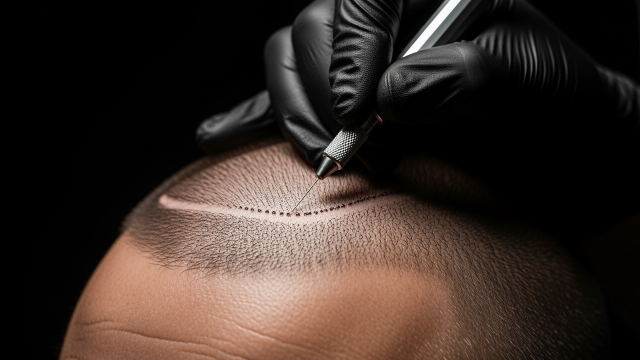
SMP scalp tattoo guide to Korea from Beijing: Guide to appointments, face-to-face consultations and return journeys
北京去韩国做SMP头皮纹发:行程、预约与术后返程规划 医学审核 Dr. Hyung Geon Kim, 医学博士,内科专科医师 要点总结 京首双城短途直飞优势 :从北京首都国际机场或北京大兴国际机场出发,直飞首尔金浦国际机场或仁川国际机场的航程仅需约两小时左右;这一便捷的交通条件使 北京去韩国做SMP 成为周末短途或小长假出行的可行选择。
Learn More
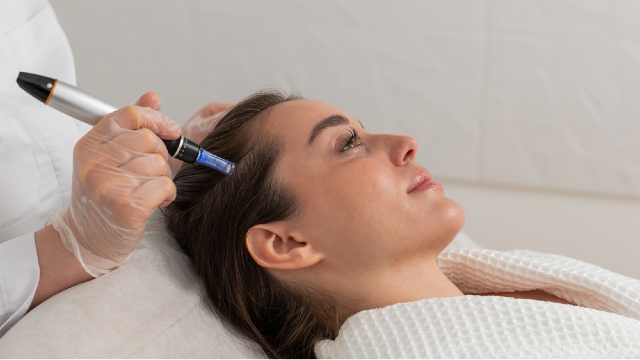
Is Scalp Micropigmentation Painful? A Straight Answer
Is Scalp Micropigmentation Painful? A Straight Answer Medically reviewed by Dr. Hyung Geon Kim, M.D., Ph.D., Board-Certified Internal Medicine Specialist Pain is near the top of what US patients ask Return…
Learn More