Medical SMP, Stem Cell Hair Restoration & Skin Rejuvenation in Gangnam, Seoul · Multilingual Concierge
1:1 Personalized Care by Dr. Hyung Geon Kim, M.D., Ph.D.
en-US


Clinical Guide
How Stem Cell Hair Restoration Supports Natural Regrowth
Understanding Hair Loss: A Common but Manageable Condition Hair loss, medically referred to as alopecia, can result from a range of causes, including genetic predisposition (androgenetic alopecia), hormonal…
Schedule a ConsultationUnderstanding Hair Loss: A Common but Manageable Condition

Hair loss, medically referred to as alopecia, can result from a range of causes, including genetic predisposition (androgenetic alopecia), hormonal changes, chronic stress, nutritional deficiencies, scalp inflammation or irritation, certain medications, and the natural aging process. In many cases, hair follicles do not disappear entirely but instead shrink and produce progressively thinner, shorter, and more brittle strands over time — a process known as follicular miniaturization.
This gradual thinning often unfolds over months or years, which is part of why hair loss can be easy to overlook in its early stages and more noticeable once it has progressed. Some patients experience diffuse thinning across the scalp, while others notice a receding hairline, a widening part line, or thinning concentrated at the crown. Each of these patterns can reflect a different underlying mechanism, which is why hair loss should not be treated as a single, uniform condition.
Because the underlying causes vary so widely from person to person, an accurate diagnosis is an essential first step before selecting any treatment approach. A visual assessment alone is often insufficient; a more complete evaluation may consider scalp condition, hair density, follicle health, and relevant medical history. This is why comprehensive hair loss assessment typically precedes any regenerative or aesthetic intervention, rather than treatment being offered as a standalone, generic solution.
What Is Stem Cell Hair Restoration?
Stem cell hair restoration is a regenerative treatment approach that aims to support the scalp environment and hair follicle activity using stem cell-based therapy. Rather than targeting only the visible symptoms of hair thinning, this approach is designed to work at the level of the scalp tissue and follicle, with the goal of encouraging conditions that are more favorable for hair growth.
This category of treatment falls within the broader field of regenerative medicine, which focuses on supporting the body's own repair and renewal processes rather than relying solely on external or purely cosmetic interventions. In the context of hair care, regenerative approaches have gained increasing clinical interest as an alternative or complement to more established options such as topical treatments, oral medications, and surgical hair transplantation.
How It May Support Natural Regrowth
Stem cells are known for their regenerative properties, including their potential role in tissue repair, cellular renewal, and the modulation of the local tissue environment. When applied to the scalp, stem cell-based treatment is intended to help stimulate the microenvironment surrounding hair follicles, which may in turn support conditions associated with healthier hair growth cycles.
This is distinct from surgical hair transplantation, as it does not involve relocating existing follicles from one area of the scalp to another. Instead, it focuses on supporting the health and activity of the follicles already present in the treated area. Because of this, stem cell hair restoration is generally categorized as a non-surgical, minimally invasive treatment option, which may make it appealing to patients who are not ready for, or are not suitable candidates for, surgical intervention.
It is important for patients to understand that outcomes vary based on individual scalp condition, the extent and cause of hair loss, follicle viability, and overall health. As with any regenerative treatment, stem cell therapy is best understood as a supportive option within a broader hair care strategy rather than a guaranteed cure. Setting realistic expectations from the outset is a central part of responsible patient education in this field.
Who Is a Good Candidate for Stem Cell Hair Restoration?

Because hair loss has multiple potential causes, candidacy for stem cell-based treatment is determined on an individual basis, typically through a detailed consultation and scalp evaluation rather than a one-size-fits-all checklist. Factors generally considered include:\n\n- The pattern and stage of hair loss, including whether thinning is localized or diffuse
- Scalp health and overall skin condition, including any signs of inflammation or irritation
- Whether hair thinning is early-stage or more advanced
- The duration of hair loss and how it has progressed over time
- General health history and any underlying medical conditions
- Patient goals, expectations, and preference for non-surgical treatment options
Patients with early to moderate thinning, or those seeking a non-surgical option to complement other hair loss care, are often considered reasonable candidates. Patients who have already tried topical or oral treatments without the results they hoped for may also inquire about regenerative options as part of a broader treatment strategy.
That said, not every patient will be a suitable candidate, and no responsible clinic should promise uniform results across all hair loss presentations. A personalized consultation remains the most reliable way to determine suitability, since no single treatment is appropriate for every hair loss pattern or every patient's underlying condition.
What to Expect During the Procedure
While specific protocols vary by clinic and by individual case, stem cell hair restoration at a specialized clinic typically follows a structured, multi-step process designed to support both safety and consistency of care:
- Initial Consultation and Diagnosis — A thorough scalp examination and discussion of medical history help identify the cause and extent of hair loss. This step may also involve a discussion of the patient's lifestyle, prior treatments, and expectations.
- Personalized Treatment Planning — Based on the diagnosis, a tailored plan is developed, which may combine stem cell therapy with other supportive treatments as appropriate for the individual case.
- Treatment Administration — The stem cell-based solution is administered to the scalp under clinical supervision, following established procedural protocols and appropriate hygiene and safety standards.
- Aftercare Guidance — Patients receive instructions for post-treatment scalp care, which may include guidance on cleansing, sun protection, and activities to avoid in the days following treatment, in order to support the treatment's intended effect.
- Follow-Up Monitoring — Ongoing follow-up allows the clinical team to track progress, assess scalp response, and adjust the care plan if needed over subsequent visits.
Because regenerative treatments work gradually rather than producing immediate visible change, patients are generally advised that noticeable results take time to develop and may require multiple sessions spaced over a period of weeks or months. Patience and consistency with any recommended aftercare or maintenance schedule are generally considered important contributors to how a patient experiences the treatment process.
The Expertise Behind the Treatment
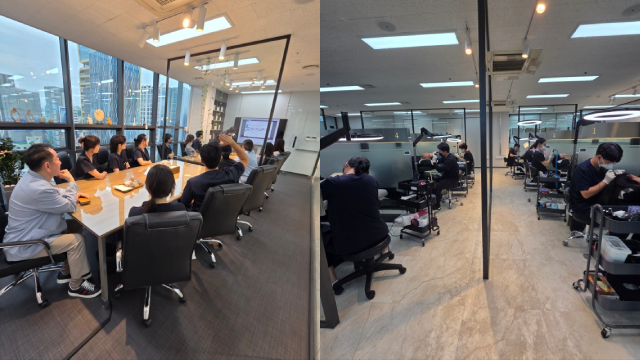
Return Clinic's Medical Director, Dr. Hyung Geon Kim, brings an academic and clinical foundation to the clinic's treatment approach. Dr. Kim is a graduate of Seoul National University College of Medicine — one of Korea's most prestigious medical institutions — and holds board certification in Internal Medicine, along with subspecialty certification in Gastrointestinal Endoscopy from the Korean Society of Gastrointestinal Endoscopy.
His broader clinical background includes a fellowship at Asan Medical Center in Seoul, one of Asia's leading tertiary medical institutions, as well as academic appointments including a former assistant professorship in the Department of Internal Medicine at a medical university hospital and a former professorship at Case Western Reserve University Hospital in the United States. He has also held clinical leadership roles, including serving as Chief of Internal Medicine and Medical Director at a general hospital, and has research experience related to chronic viral hepatitis, liver cirrhosis, fatty liver disease, and hepatocellular carcinoma.
This depth of internal medicine training and academic experience informs Return Clinic's broader emphasis on careful diagnosis, thorough patient evaluation, and evidence-informed treatment planning across its aesthetic and regenerative services. Rather than approaching hair restoration purely as a cosmetic add-on, this clinical background supports a more structured, health-oriented framework for evaluating each patient's individual situation before any treatment is recommended.
Why Patients Choose Return Clinic
Located steps from Sinsa Station in the heart of Gangnam, Seoul, Return Clinic integrates hair loss diagnosis, scalp micropigmentation, skin rejuvenation, and stem cell-based regenerative treatments under a single, patient-centered philosophy. Rather than offering isolated treatments, the clinic positions each service within a broader continuum of aesthetic and regenerative care, allowing patients to address multiple concerns without needing to coordinate between separate providers.
The clinic's approach emphasizes:
- Individualized treatment planning, tailored to each patient's scalp condition, hair health, and personal goals rather than a standardized protocol
- A dedicated Stem Cell Center, established in 2026 to expand the clinic's regenerative treatment capabilities and reflect its ongoing investment in this area of aesthetic medicine
- Continuity of care, from initial diagnosis through treatment, aftercare, and follow-up, so that patients are supported at each stage rather than only during the treatment session itself
- A multidisciplinary service range, spanning hair restoration, scalp micropigmentation, skin rejuvenation, and regenerative aesthetics, which allows for coordinated treatment planning when a patient's concerns span more than one area
Rather than applying a one-size-fits-all protocol, Return Clinic's team develops treatment plans based on individual assessment findings, with the stated philosophy of helping each patient "return to their prime" rather than pursuing an artificial or externally imposed standard of appearance.
Recovery, Safety, and Realistic Outcomes
Stem cell hair restoration is generally considered a non-surgical, minimally invasive option, and recovery expectations are typically modest compared to surgical procedures such as hair transplantation. Most patients can resume normal daily activities shortly after treatment, though individual aftercare instructions — such as avoiding excessive sun exposure, certain hair products, or strenuous activity for a short period — should always be followed as advised by the treating clinician.
As with any medical or aesthetic procedure, patients should discuss potential risks, sensitivities, or contraindications with their treating physician prior to treatment. Transparent communication about what a treatment can and cannot be expected to achieve is a core part of responsible patient care.
Patients should approach any regenerative hair treatment with realistic expectations. Results depend on multiple factors, including the underlying cause and severity of hair loss, individual biological response, and adherence to any recommended aftercare or maintenance plan. Improvement is generally gradual rather than immediate, and outcomes can differ meaningfully from one patient to another. Regular follow-up appointments allow the clinical team to monitor scalp response over time and adjust the treatment plan as needed, rather than relying on a single session to determine long-term results.
Conclusion
Stem cell hair restoration represents one part of a broader, evolving field of regenerative aesthetic medicine — one that continues to develop as clinical understanding of hair follicle biology and tissue regeneration advances. At Return Clinic in Seocho-gu, Seoul, this treatment is offered within a personalized care framework that begins with accurate diagnosis and continues through tailored treatment, aftercare, and follow-up, rather than being presented as a standalone or universal solution.
For patients exploring options for hair thinning or hair loss, understanding the difference between surgical and non-surgical approaches, recognizing the importance of individualized diagnosis, and maintaining realistic expectations about the pace and scope of results can all contribute to a more informed decision-making process. Patients considering this option are encouraged to schedule a consultation to discuss their specific scalp condition, treatment goals, and what realistic outcomes may look like for their individual case.
Frequently Asked Questions
More Articles
Continue exploring hair restoration and skin rejuvenation insights from Return Clinic.
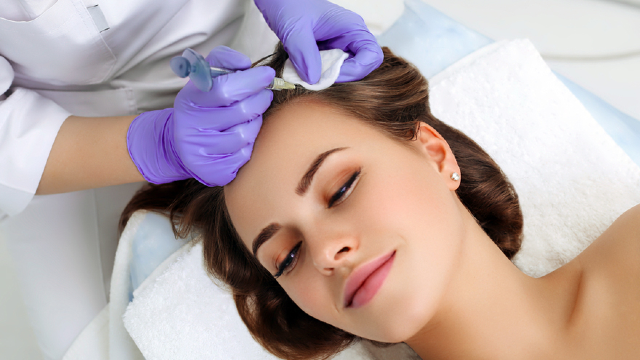
Return Clinic's Non-Surgical Options Compared by Concern
Return Clinic's Non-Surgical Options Compared by Concern Medically reviewed by Dr. Hyung Geon Kim, M.D., Ph.D., Board-Certified Internal Medicine Specialist A clinic menu is organized by what the clinic does.
Learn More
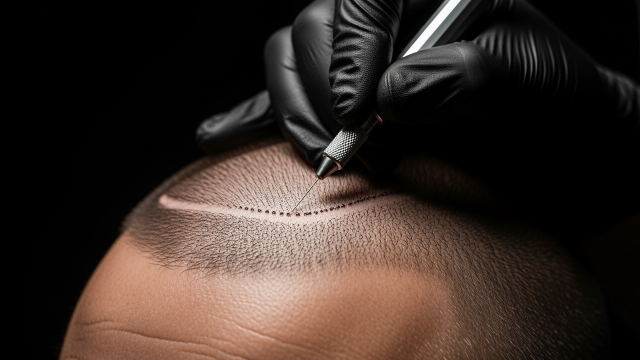
SMP scalp tattoo guide to Korea from Beijing: Guide to appointments, face-to-face consultations and return journeys
北京去韩国做SMP头皮纹发:行程、预约与术后返程规划 医学审核 Dr. Hyung Geon Kim, 医学博士,内科专科医师 要点总结 京首双城短途直飞优势 :从北京首都国际机场或北京大兴国际机场出发,直飞首尔金浦国际机场或仁川国际机场的航程仅需约两小时左右;这一便捷的交通条件使 北京去韩国做SMP 成为周末短途或小长假出行的可行选择。
Learn More
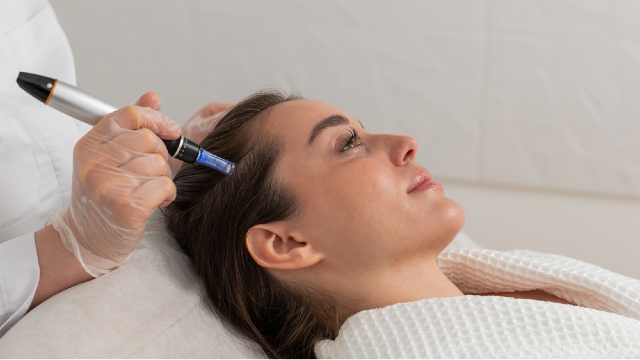
Is Scalp Micropigmentation Painful? A Straight Answer
Is Scalp Micropigmentation Painful? A Straight Answer Medically reviewed by Dr. Hyung Geon Kim, M.D., Ph.D., Board-Certified Internal Medicine Specialist Pain is near the top of what US patients ask Return…
Learn More