Medical SMP, Stem Cell Hair Restoration & Skin Rejuvenation in Gangnam, Seoul · Multilingual Concierge
1:1 Personalized Care by Dr. Hyung Geon Kim, M.D., Ph.D.
en-US

Clinical Guide
Laser Lifting for Face and Neck: What to Expect, Step by Step
Laser Lifting for Face and Neck: What to Expect, Step by Step Medically reviewed by Dr. Hyung Geon Kim, M.D., Ph.D., Board-Certified Internal Medicine Specialist Most descriptions of laser lifting explain the…
Schedule a ConsultationLaser Lifting for Face and Neck: What to Expect, Step by Step
Medically reviewed by Dr. Hyung Geon Kim, M.D., Ph.D., Board-Certified Internal Medicine Specialist
Most descriptions of laser lifting explain the physics and skip the appointment. That is backwards for someone deciding whether to book, because the physics is the same everywhere and the appointment is what you actually experience.
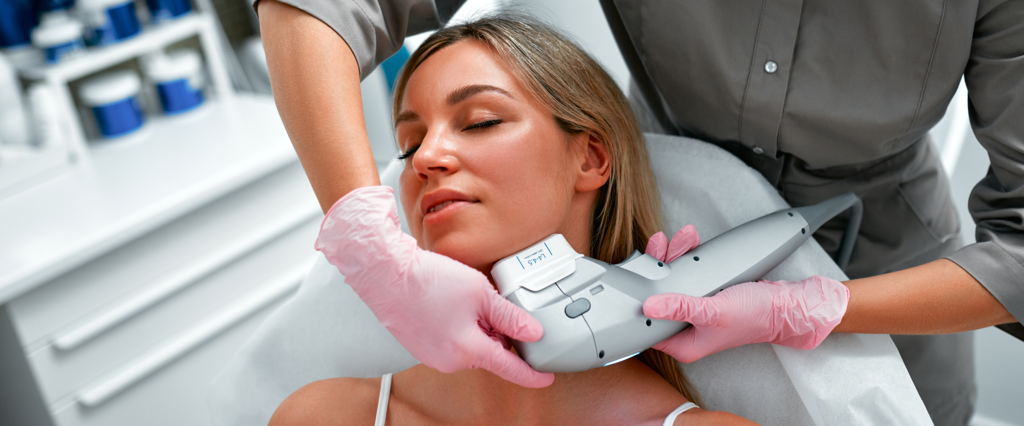
So this page does it the other way round. Return Clinic describes laser lifting as using focused laser energy to heat the deeper layers of skin, tightening existing collagen and stimulating new collagen production, creating a gradual firming and lifting effect commonly used on the face and neck to improve mild sagging and fine lines, with minimal downtime. Then it describes the visit. We will follow the visit.
Before you arrive
Preparation is short and each item has a reason.
The clinic asks you to follow provider instructions, keep the skin clean, avoid sun exposure, and disclose medications, allergies and medical history.
Sun exposure is the one people skip. Skin with recent sun exposure responds differently to heat, and the instruction exists for that reason rather than as general skincare advice. Disclosure matters for the same practical reason it matters anywhere — some medical conditions and some medications change what is appropriate, and the clinic notes that people with active skin infections, certain medical conditions, or pregnancy may not be suitable.
The appointment, step by step
Return Clinic sets the sequence out directly, and it is worth walking through because each step answers a question patients ask.
Cleansing and marking. The treatment begins with cleansing the skin and marking the areas to be treated. Marking is not ceremonial — it is how coverage stays even across a face that the practitioner is working on in sections.
Numbing, if needed. A numbing cream may be applied for comfort. The clinic states that laser lifting is generally performed with topical or no anesthesia.
Energy delivery. The provider uses a handheld laser device to deliver controlled energy beneath the skin's surface, moving it across the treatment area in a systematic pattern. "Systematic" is doing work in that sentence: even coverage is what prevents a patchy result.
What you feel. The clinic says you may feel warmth or mild tingling during this step. That is the expected sensation and it is worth having calibrated in advance — the mechanism is heat, so feeling heat is the treatment working rather than a sign something is wrong.
Afterward. Aftercare is keeping the treated area clean, avoiding excessive heat and sun exposure, and following the recommended skincare instructions.
What heating the deeper layers achieves
Two distinct things happen, and separating them explains the timeline.
Existing collagen tightens. Collagen contracts when heated. That produces an immediate, modest effect.
New collagen is stimulated. Controlled heating provokes a wound-healing response whose product includes new collagen. That produces a delayed effect, and it is the larger part.
Hence the clinic's framing: a gradual firming and lifting effect, with results developing as collagen remodeling occurs. The first mechanism is why some patients notice something early. The second is why the honest assessment point is months out.
What it suits
The clinic names adults with mild to moderate skin laxity seeking non-surgical tightening, and describes the benefits as possibly improving skin firmness, tone and mild sagging with gradual, natural-looking results.
It also states the boundary of what may be claimed for this category with unusual precision: approved marketing claims for laser lifting treatments are generally limited to what regulatory bodies have cleared the specific device for — typically non-surgical skin tightening, improvement in the appearance of fine lines and wrinkles, and mild lifting of sagging skin in the face and neck.
That is a clinic writing down its own constraints, which is worth noticing. The operative words are "mild" and "appearance". The American Academy of Dermatology's material on whether skin-tightening treatments can firm sagging skin gives the honest range for the category, and it is the right expectation-setter before a consultation rather than after one.
The neck
The neck is named specifically in the clinic's description of where this is commonly used, and it deserves separate mention because it behaves differently from the face.
Neck skin is thinner, it moves constantly, and laxity there tends to be noticed earlier and tolerated less. It is also an area where patients frequently treat the face alone and then find the untreated neck draws the eye — a mismatch that is easier to prevent than to correct.
If the neck is part of what bothers you, say so at assessment rather than assuming a facial treatment includes it. Treatment duration depends on the area treated, so including it is a plan decision with consequences for time and possibly for session count.
Risks
The clinic lists temporary redness, swelling or tenderness as possible, and names rare risks including burns or uneven results if the treatment is not properly administered.
That second clause is unusually direct for clinic material and it should be read as written. A device delivering heat into skin can injure it if delivered wrongly, and the two named failure modes — burns, uneven results — are both about administration rather than about the technology.
The practical consequence is that who operates the device, and how evenly they work, are legitimate questions. The clinic's own description of the procedure emphasizes moving across the treatment area in a systematic pattern — which is the part that prevents the uneven result it names as a risk, and the part that depends entirely on the person holding the device.
Recovery
Most patients resume normal activities quickly, with mild redness or sensitivity resolving within a few days.
Two aftercare instructions carry more weight than they appear to. Avoiding excessive heat matters because the treatment has already deposited heat and the tissue is responding to it. Avoiding sun exposure matters because treated skin is in an altered state, and this is the instruction that continues past the point where you feel normal.
MedlinePlus, the US National Library of Medicine's patient service, covers skin aging generally and is a useful frame for understanding why sun exposure is a live variable rather than a precaution.
Why sessions are counted rather than assumed
The clinic states that treatment duration depends on the area treated and that one or more sessions may be recommended. Both halves of that are worth taking literally.
Area drives duration because coverage is delivered systematically across a surface — a face and neck together is meaningfully more ground than a jawline. And session count is recommended rather than fixed because the response to a first treatment is information that did not exist before it.
That has a practical implication for a trip. A plan quoted as a single appointment may be complete, or it may be the first of a series whose remainder was never discussed. Ask which it is before you book flights, and ask what a second session would be for — the answer separates a plan from an appointment.
How it compares with the clinic's ultrasound option
Return Clinic offers both laser lifting and HIFU lifting, and lists the other as an alternative to each.
Resist the instinct to rank them. They deposit energy by different means and reach tissue differently, which means they suit different presentations rather than representing strong and weak versions of one idea. The clinic's position on both is the same: treatment is considered according to the individual from consultation through follow-up care.
Which is to say the choice is an output of the assessment. If you arrive having decided, you have removed the assessment's most useful function.
Reading a laser plan you did not choose
Here is the situation most patients are actually in, and the skill worth having.
You will not select the wavelength, the depth or the energy settings. You are not equipped to, and a clinic that offered to let you would be doing something strange. What you can do is read the plan you are given well enough to tell a considered one from a generic one — and that is a real skill with concrete tells.
A considered plan names your presentation. It refers to what your skin is doing — where the laxity is, what your skin condition is, what the treatment is aiming at on your face specifically. A generic plan names the device and the area.
A considered plan states a limit. The clinic's own material says the claims are typically confined to non-surgical tightening, improvement in the appearance of fine lines and wrinkles, and mild lifting. A plan that promises more than its own category claims has left the evidence behind.
A considered plan says what would change it. Someone who has actually built a plan around your skin can say what finding would have led them somewhere else. Someone reciting a standard offering cannot, because there was no decision to describe.
A considered plan has an assessment point in it. Gradual means months. A plan with no answer to "when do we look at this, and against what" has not thought past the appointment.
Ask those four things, in that order, and you will learn more about whether to proceed than any amount of reading about wavelengths. They work because each one is answerable in a sentence by someone who has examined you and awkward for someone who has not.
And take a photograph before you go, in ordinary light, straight on and from each side. Gradual results are invisible to daily observation, and the comparison you will want in four months is one you can only create now.
Raise the four questions through the contact page with your dates, and use the published before-and-after gallery to calibrate what "mild lifting" looks like in practice — which is easier to see than to read.
The Bottom Line
- The appointment runs cleansing and marking, optional numbing cream, systematic energy delivery with warmth or mild tingling, then aftercare.
- Two mechanisms operate: existing collagen tightens immediately and modestly, new collagen develops over months, which is the larger part.
- The clinic states the category's claims are typically limited to non-surgical tightening, improved appearance of fine lines, and mild lifting of the face and neck.
- Burns and uneven results are named as rare risks tied to administration, which makes settings and operator legitimate questions.
- Judge a plan on whether it names your presentation, states a limit, says what would change it, and contains an assessment point.
Frequently Asked Questions
What happens during the appointment?
Cleansing and marking of the treatment areas, numbing cream if needed, then a handheld device delivering controlled energy across the area in a systematic pattern, followed by aftercare instructions.
Will it hurt?
Laser lifting is generally performed with topical or no anesthesia, and warmth or mild tingling during treatment is expected. The mechanism is heat, so feeling heat is the treatment working.
What does it actually do to the skin?
It heats deeper layers, which tightens existing collagen immediately and stimulates new collagen production over the following months.
How much lifting can I expect?
The clinic states the category's claims are typically limited to non-surgical tightening, improvement in the appearance of fine lines and wrinkles, and mild lifting of sagging skin in the face and neck.
Can it treat my neck?
The neck is named among the common treatment areas. Say so at assessment rather than assuming a facial treatment includes it, since area affects treatment duration and planning.
What are the risks?
Temporary redness, swelling or tenderness, with burns or uneven results named as rare risks if the treatment is not properly administered.
What is the recovery?
Most patients resume normal activities quickly, with mild redness or sensitivity resolving within a few days. Avoiding excessive heat and sun exposure afterward matters more than it sounds.
Should I choose this or HIFU lifting?
Neither is a stronger version of the other; they deposit energy differently and suit different presentations. The choice is an output of the assessment rather than an input to it.
This article is for general informational purposes and does not constitute individualized medical advice. It is not a self-diagnosis tool. Suitability, device settings and expected outcomes can only be determined through a consultation with a qualified dermatologist or other appropriately qualified clinician who has assessed your skin in person.
More Articles
Continue exploring hair restoration and skin rejuvenation insights from Return Clinic.
Return Clinic's Non-Surgical Options Compared by Concern
Return Clinic's Non-Surgical Options Compared by Concern Medically reviewed by Dr. Hyung Geon Kim, M.D., Ph.D., Board-Certified Internal Medicine Specialist A clinic menu is organized by what the clinic does.
Learn More
SMP scalp tattoo guide to Korea from Beijing: Guide to appointments, face-to-face consultations and return journeys
北京去韩国做SMP头皮纹发:行程、预约与术后返程规划 医学审核 Dr. Hyung Geon Kim, 医学博士,内科专科医师 要点总结 京首双城短途直飞优势 :从北京首都国际机场或北京大兴国际机场出发,直飞首尔金浦国际机场或仁川国际机场的航程仅需约两小时左右;这一便捷的交通条件使 北京去韩国做SMP 成为周末短途或小长假出行的可行选择。
Learn More
Is Scalp Micropigmentation Painful? A Straight Answer
Is Scalp Micropigmentation Painful? A Straight Answer Medically reviewed by Dr. Hyung Geon Kim, M.D., Ph.D., Board-Certified Internal Medicine Specialist Pain is near the top of what US patients ask Return…
Learn More