Medical SMP, Stem Cell Hair Restoration & Skin Rejuvenation in Gangnam, Seoul · Multilingual Concierge
1:1 Personalized Care by Dr. Hyung Geon Kim, M.D., Ph.D.
en-US


Laser Lifting & Skin Tightening · Consultation Required
Laser Lifting
Laser lifting is a non-surgical skin tightening procedure that uses controlled laser energy to firm and lift skin that has lost its elasticity.
Schedule a ConsultationWhat is laser lifting?

Laser lifting is a non-surgical skin tightening procedure that uses controlled laser energy to firm and lift skin that has lost its elasticity. Rather than removing or repositioning tissue surgically, the treatment works by delivering measured thermal energy into the deeper layers of the skin, where the body's structural support proteins live. The aim is to encourage the skin's own tightening and repair response, so that the improvement comes from the patient's own tissue rather than from an implanted or injected material.
In practical terms, this means laser lifting is a treatment for people who can see that their skin is not as firm as it once was — a softer jawline, a heavier-looking lower face, skin that no longer springs back the way it used to — but who do not want, or are not ready for, a surgical lift.
How is laser lifting different from other approaches to facial ageing?
Different concerns call for different tools, and no single treatment addresses everything. Laser lifting is specifically a skin quality and skin firmness treatment. It targets the laxity and textural change in the skin envelope itself.
- Compared with surgical lifting: surgical procedures physically reposition and remove tissue and are typically considered for more advanced laxity. Laser lifting requires no incision, no general anaesthesia, and no surgical recovery, but it also works within the limits of what non-surgical energy can achieve.
- Compared with injectable fillers: fillers primarily restore or add volume in specific locations. Laser lifting does not add volume; it works on the firmness and quality of the skin itself. The two address different aspects of facial ageing.
- Compared with resurfacing-focused laser treatments: treatments aimed mainly at pigment or surface texture work at a different depth and with different goals. Laser lifting is directed at tightening and structural support.
None of these approaches is superior in the abstract. The right choice depends on the individual's anatomy, skin condition, medical history, expectations, and tolerance for downtime — which is exactly what a proper consultation is for.
Who Needs Laser Lifting Treatment?
Laser lifting is generally suited to people with mild to moderate skin laxity who want a firmer, more defined appearance and prefer a non-surgical route. Candidacy is not decided by age alone — two patients of the same age can have very different skin thickness, elasticity, and treatment needs. A physician-led assessment is always required before any treatment is planned. The profiles below describe the concerns most commonly discussed at consultation.
- Adults roughly in their 30s to 60s noticing early or progressive skin laxity. This is the range in which collagen decline typically becomes visible rather than merely measurable. Younger patients often present with subtle softening along the jawline or a slightly less defined facial outline, while patients later in this range may describe a more general loss of firmness across the cheeks and lower face.
- Patients concerned about a softening jawline and less defined lower face. Loss of definition along the mandibular border is one of the most frequently reported concerns. Patients often describe it as their face looking "heavier," "less sharp," or "tired," even at a stable body weight.
- Patients with fine lines and early wrinkling associated with reduced skin elasticity. Fine lines around the forehead, brow, and cheeks that appear more prominent as skin loses recoil may respond to treatments that address underlying skin firmness rather than surface texture alone.
- Patients with laxity in the under-chin and upper neck area. The submental and neck region is a common concern, particularly where skin firmness has decreased and the transition from chin to neck has become less distinct.
- Patients with uneven or rough skin texture alongside firmness concerns. Where laxity is accompanied by a general dullness or coarseness of skin texture, a treatment that stimulates dermal remodelling may be considered as part of a broader skin health plan.
- Patients who want a natural, gradual change rather than an obvious alteration. Because improvement from collagen remodelling develops progressively, laser lifting appeals to patients who prefer results that emerge quietly over weeks rather than an abrupt visible change.
- Patients who cannot accommodate surgical downtime. Working professionals, carers, and travelling patients frequently prioritise a treatment that does not require extended time away from ordinary activity. Laser lifting is often discussed in this context, though recovery expectations are always set individually.
- Patients who prefer a regenerative approach to their own tissue. Some patients specifically wish to avoid implanted or injected material and prefer treatments that work by stimulating the body's own repair mechanisms.
Meet the Specialist in Laser Lifting & Skin Tightening
Return Clinic's approach to laser lifting rests on a straightforward principle: an aesthetic procedure is still a medical procedure, and it should be governed accordingly.
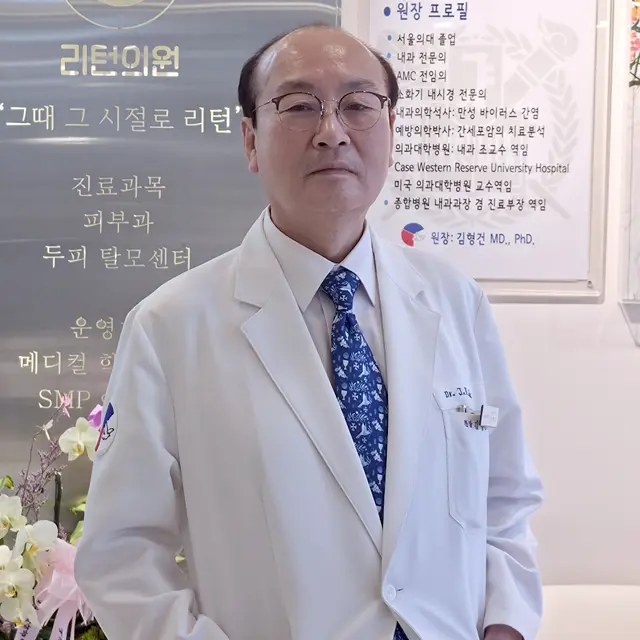
Dr. Hyung Geon Kim, M.D., Ph.D. — Medical Leadership
Dr. Hyung Geon Kim is a board-certified specialist in Internal Medicine and a certified Gastrointestinal Endoscopy subspecialist, recognised by the Korean Society of Gastrointestinal Endoscopy. He is a graduate of Seoul National University College of Medicine, and completed fellowship training at Asan Medical Center (AMC). He holds a Master's degree in Internal Medicine, with research in chronic viral hepatitis, and a Ph.D. in Preventive Medicine, with research analysing hepatocellular carcinoma treatment.
His academic and hospital career includes appointments as Assistant Professor in the Department of Internal Medicine at a medical university hospital, Professor at Case Western Reserve University Hospital in the United States, and subsequently Chief of Internal Medicine and Medical Director at a general hospital. His clinical specialties are liver disease — including chronic hepatitis B and C, liver cirrhosis, and fatty liver disease — hepatocellular carcinoma, general gastrointestinal disorders, and advanced diagnostic and therapeutic endoscopy.
At Return Clinic, Dr. Kim's role in relation to laser lifting is one of medical governance and clinical standard-setting rather than hands-on aesthetic device operation. Decades of hospital-level internal medicine practice — including patient safety oversight, medical directorship, and the systematic risk assessment that endoscopic and hepatology practice demands — inform the clinic's protocols for patient screening, medical history review, contraindication checking, and post-treatment monitoring.
Laser Lifting Treatment Areas and Expected Improvements
Laser lifting is planned area by area. During assessment, the physician-supervised team maps where laxity is most evident, how thick or thin the skin is in each zone, and which areas are likely to respond. Treatment parameters are then adjusted accordingly, because the skin over the jawline behaves differently from the skin around the eyes.
- Forehead and brow region: The upper face is often where loss of firmness first becomes visible, with the brow position settling lower and horizontal forehead lines becoming more etched. Laser lifting in this region aims to improve the firmness and support of the skin across the forehead and brow, which may contribute to a more open, rested appearance around the upper face. Because the skin here sits over bone with relatively little cushioning, treatment settings are chosen conservatively and comfort is monitored throughout.
- Mid-face and cheek area: The cheeks carry much of the face's structural impression, and softening here tends to affect how the whole face reads. Laser lifting targets the dermal support of the mid-face with the goal of improving firmness and helping the cheek area appear better supported rather than fuller. This is a common area of concern for patients who feel their face has become less defined without any change in weight, and it is often treated in combination with the jawline for a more balanced overall result.
- Area around the eyes (periorbital region): The skin around the eyes is the thinnest on the face and is frequently the first place where crepiness and fine lines appear. Where treatment in this region is clinically appropriate, the aim is a modest improvement in skin firmness and texture around the outer eye area. Careful protective measures and conservative settings are essential here, and the treating team will advise clearly if a patient's periorbital anatomy or condition makes treatment in this zone inadvisable.
- Jawline and lower face: This is among the most requested areas for laser lifting, because loss of definition along the mandibular border is highly visible in photographs and in profile. Treatment is directed at tightening the skin envelope along the jawline with the goal of a cleaner, more defined facial outline. Patients commonly describe wanting their jawline to look "sharper" again; the realistic aim is improved firmness and definition, not the degree of change a surgical procedure would produce.
- Under-chin and upper neck region: The submental area and upper neck often show laxity earlier and more noticeably than patients expect, particularly with a history of weight fluctuation or postural strain from screen use. Laser lifting here aims to improve skin firmness and the definition of the chin-to-neck transition. Because neck skin is thinner and more mobile than facial skin, this region is approached with particular care and is frequently treated in a staged manner.
- Selected body areas with skin laxity: Where a patient raises concerns about firmness on the body — for example following weight change — the area may be assessed for suitability. Body skin differs substantially from facial skin in thickness, healing behaviour, and response to energy-based treatment, so candidacy is decided individually and expectations are discussed frankly before anything is scheduled.
Laser Lifting Treatment Process and Timeline
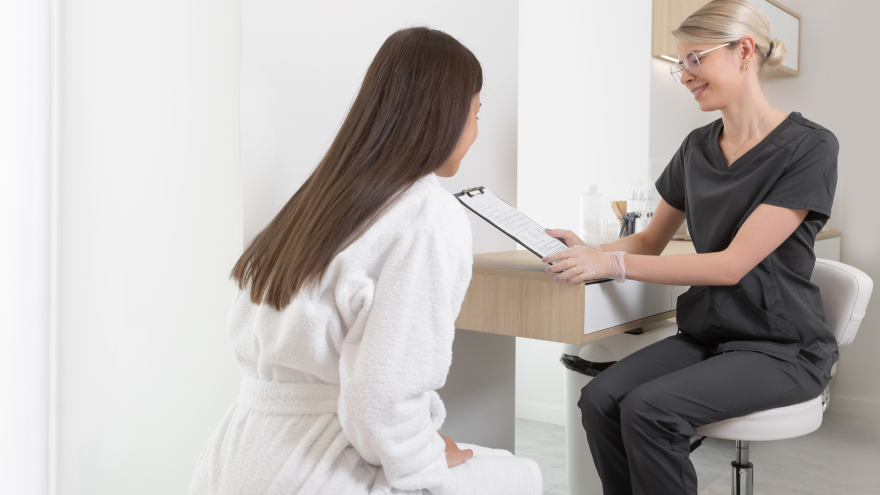
Return Clinic follows a structured pathway from first consultation through to follow-up review. The sequence below describes what a typical laser lifting journey involves, though the specifics are adjusted to each patient.
Step 1: Consultation and skin assessment
The process begins with a 1:1 consultation. The team reviews your concerns, your aesthetic goals, and your full medical history — including current medications, previous aesthetic or surgical procedures, skin conditions, healing history, and any relevant underlying illness. Your skin is then assessed for laxity, thickness, texture, and overall condition, and the specific areas of concern are mapped. This is the stage at which suitability is determined; if laser lifting is not appropriate for you, or is unlikely to meet your expectations, you should be told so directly.
Step 2: Treatment planning and informed consent
Based on the assessment, a treatment plan is prepared covering the areas to be treated, the approach to be used, and whether a staged series of sessions is advisable. Realistic expectations, likely recovery, possible side effects, and cost are discussed before anything is booked. You should leave this stage understanding what is planned, what it can reasonably achieve, and what it cannot.
Step 3: Skin preparation on the day of treatment
On the treatment day, the area is cleansed and prepared. Depending on the area being treated and individual sensitivity, a topical numbing preparation may be applied and allowed time to take effect. Protective eyewear is used, and the treatment area is marked so that energy delivery is systematic and evenly distributed.
Step 4: The laser lifting session
The laser is applied across the mapped treatment zones with settings selected for that specific area and skin type. Most patients describe a warming sensation with intermittent brief episodes of heat as energy is delivered. Communication during the session matters — the treating team should be checking your comfort throughout, and settings can be adjusted if a particular zone is more sensitive. Session length depends on how many areas are being treated.
Step 5: Immediate aftercare and same-day expectations
Immediately after treatment, mild redness and a sensation of warmth in the treated area are common and usually settle within a short period. Some patients experience mild swelling or temporary sensitivity. You will be given specific aftercare guidance, which typically includes diligent sun protection, gentle skincare, avoidance of heat exposure such as saunas and hot baths, avoidance of vigorous exercise for a defined period, and avoidance of harsh or actively exfoliating products until the skin has settled. Downtime is generally limited, but this varies by individual and by treatment intensity.
Step 6: Follow-up review and staged sessions
A follow-up appointment is arranged to review how your skin has responded and whether any further sessions are advisable. Because collagen remodelling is a gradual biological process, meaningful assessment of results is made over a period of weeks rather than days. Where a staged series has been planned, the interval between sessions is set to allow the skin to respond and recover between treatments.
A note on recovery: most patients find that ordinary daily activity can resume promptly, with cosmetic considerations such as redness settling relatively quickly. However, individual recovery differs. If you experience pain, blistering, persistent swelling, unusual discolouration, or any reaction that concerns you, contact the clinic promptly rather than waiting for your scheduled follow-up.
Laser Lifting Results, Safety, and Longevity
Because laser lifting works by stimulating the skin's own collagen production, results build progressively and then persist for as long as the newly remodelled collagen is maintained. There is no fixed duration that applies to every patient. Longevity is influenced by age, baseline skin condition, sun exposure, smoking, general health, and the natural ongoing progression of skin ageing — which continues after treatment as it did before. Many patients discuss a maintenance approach with their physician rather than expecting a single permanent outcome. Return Clinic does not describe laser lifting results as permanent, and any claim of permanence in non-surgical skin tightening should be treated sceptically.
Laser lifting is a non-surgical, non-incisional procedure performed without general anaesthesia, which removes several categories of surgical risk. Safety in practice depends heavily on three things: correct patient selection, appropriate energy settings for the individual and the treatment area, and proper medical screening beforehand.
This is precisely where Return Clinic's medical governance model is relevant. With physician oversight from a board-certified Internal Medicine specialist, the screening process gives weight to medical history — medications, underlying conditions, healing history — rather than treating aesthetic procedures as separate from general health. The clinic's conservative approach favours staged, measured treatment over aggressive single-session intervention.
Common and generally short-lived effects include redness, a sensation of warmth, mild swelling, and temporary skin sensitivity in the treated area. Some patients experience mild bruising or a temporary change in skin texture as the skin settles.
Less common effects can include prolonged redness or swelling, temporary changes in skin pigmentation (which may be more likely in patients with deeper skin tones or recent sun exposure), and localised discomfort persisting beyond the expected period.
Serious complications — including burns, blistering, infection, or scarring — are rare, but they are possible, as with any energy-based medical procedure. This risk is reduced, though never eliminated, by careful patient selection, appropriate settings, sterile technique, and diligent aftercare. Patients who develop signs of infection, blistering, severe pain, or an unexpected skin reaction should seek medical review promptly.
Why Choose Return Clinic for Laser Lifting & Skin Tightening?
Return Clinic approaches aesthetic dermatology as medicine first. Laser lifting sits within the clinic's Stem Cell & Dermatology department, and that placement shapes how treatment is planned: skin is treated as living tissue with regenerative capacity and a relationship to the patient's overall health, not as a surface to be worked on in isolation.
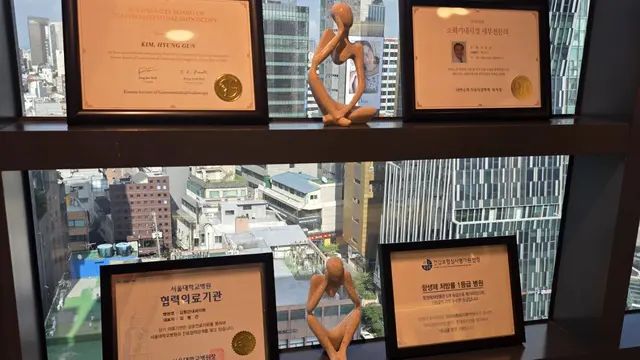
The clinic's medical governance is led by Dr. Hyung Geon Kim, M.D., Ph.D. — a graduate of Seoul National University College of Medicine, fellowship-trained at Asan Medical Center, a former Professor at Case Western Reserve University Hospital in the United States, and a former Chief of Internal Medicine and Medical Director at a general hospital. That background is not aesthetic device training, and Return Clinic does not present it as such. What it brings is something different and, arguably, harder to find in aesthetic practice: the patient-safety discipline of hospital internal medicine, applied to the screening, protocol design, and monitoring standards that govern how laser lifting is delivered here.
The clinic's practical philosophy is conservative and consultative. Treatment is staged rather than rushed, expectations are set frankly, and patients are told when a treatment is unlikely to achieve what they are hoping for. The clinic works on a 1:1 personalised care model, so the person assessing you understands your history and your goals rather than working from a standard template.
Clinic USPs:
- Physician-led medical governance from an M.D., Ph.D. with hospital leadership experience — including former service as Chief of Internal Medicine and Medical Director, bringing hospital-standard patient screening and safety protocols to non-surgical aesthetic care.
- Academic and international clinical credentials — Seoul National University College of Medicine graduate, Asan Medical Center fellowship training, and a former professorship at Case Western Reserve University Hospital in the United States, supporting a rigorous, evidence-informed clinical culture.
- Conservative, staged treatment planning within a Stem Cell & Dermatology framework — laser lifting is planned as part of a broader view of skin health, with treatment intensity built up carefully rather than delivered aggressively in a single session.
- 1:1 personalised consultation and continuity of care — from initial assessment through aftercare and follow-up review, with clear guidance on what to expect and direct access to the clinic if any concern arises after treatment.
For international and English-speaking patients travelling to South Korea for aesthetic dermatology, the clinic's consultation-first structure is designed to make the process clear: assessment before commitment, honest discussion of what laser lifting can and cannot deliver, and defined aftercare guidance to take home.
Laser Lifting & Skin Tightening Patient Experiences
The following are anonymised, composite patient examples that reflect the kinds of concerns and outcomes commonly discussed in laser lifting consultations. They are illustrative and are not presented as verified individual testimonials. Individual results differ, and no outcome is guaranteed.
Jawline Definition Patient, 40s
A patient in her forties came in describing a gradual softening along her jawline that she noticed most in photographs taken from the side. She had no interest in surgery and wanted a treatment that would not interrupt her working week. Following assessment, a staged laser lifting plan focused on the jawline and lower face was agreed. At follow-up she reported that her facial outline looked somewhat more defined and that her skin felt firmer to the touch, describing the change as noticeable to her without being obvious to others.
Skin Firmness and Texture Patient, 50s
A patient in his fifties presented with general loss of facial firmness and skin texture that had become rougher over several years, alongside a work history involving significant outdoor sun exposure. His medical history was reviewed in full during consultation before a conservative, staged treatment plan was agreed for the mid-face and under-chin region. Over the weeks following his sessions, he described his skin as feeling firmer and looking smoother, and said the gradual nature of the change was what he had wanted.
Ready to find out whether laser lifting is right for your skin?
Firmness concerns rarely resolve on their own — but a clear, honest assessment will tell you exactly what non-surgical skin tightening can realistically do for you, and what it cannot.
Primary CTA: Book your 1:1 laser lifting consultation at Return Clinic today. Our physician-supervised team will assess your skin condition and medical history in detail, explain which treatment areas are suitable for you, set realistic expectations for what laser lifting can achieve, and answer every question you have — with no pressure to proceed and no obligation to book treatment on the day.
Secondary option: Prefer to speak to someone first? Call the Return Clinic appointment desk to reach our patient coordination team, who can answer questions about consultation availability, what to bring to your first appointment, and English-language support for international patients.
Individual clinical results and recovery timelines may vary depending on scalp/skin condition and personalized treatment planning. Temporary redness, mild swelling, or tenderness may occur following treatment.
Related Treatments
Explore additional hair restoration, scalp micropigmentation, and skin rejuvenation procedures at Return Clinic.

Liftera-A2 HIFU Lifting
Liftera-A2 HIFU lifting is a non-surgical skin tightening procedure that uses high-intensity focused ultrasound to deliver heat energy to precise depths beneath the skin surface.
Learn More

Medical SMP Hair Loss Care
Scalp micropigmentation occupies a distinct position and is not a substitute for medical or surgical hair-loss management.
Learn More

SMP Hairline
SMP hairline treatment applies this technique specifically to the frontal hairline — the area that frames the face and is usually the first thing both the patient and other people notice.
Learn More