Medical SMP, Stem Cell Hair Restoration & Skin Rejuvenation in Gangnam, Seoul · Multilingual Concierge
1:1 Personalized Care by Dr. Hyung Geon Kim, M.D., Ph.D.
en-US

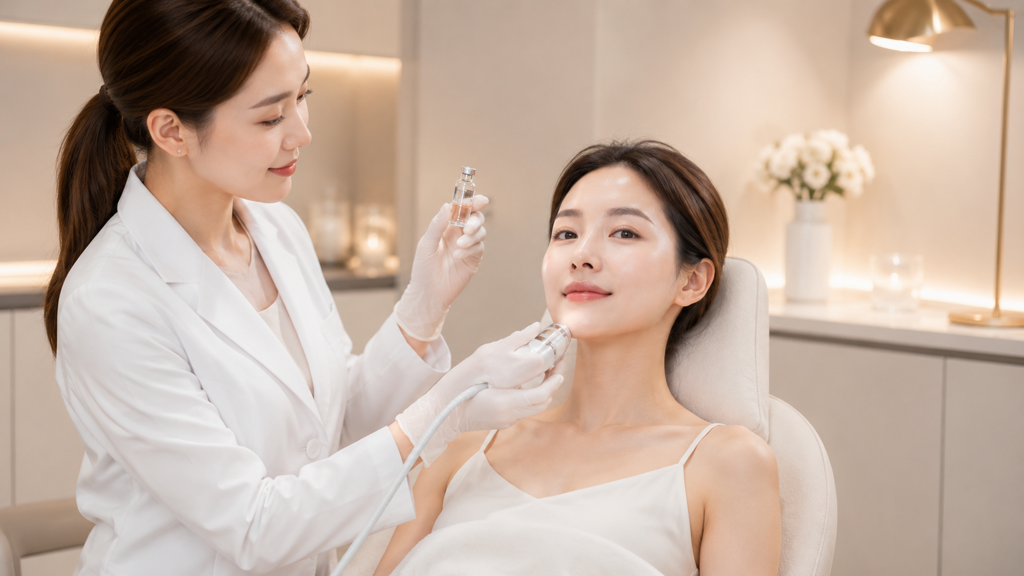
Skin Rejuvenation & Regenerative Aesthetics · Consultation Required
Stem Cell Aesthetic Treatment
Stem cell aesthetic treatment is a non-surgical regenerative skin rejuvenation procedure that aims to support the skin's own repair and renewal environment, rather than adding volume or resurfacing the surface…
Schedule a ConsultationWhat Is Stem Cell Aesthetic Treatment?
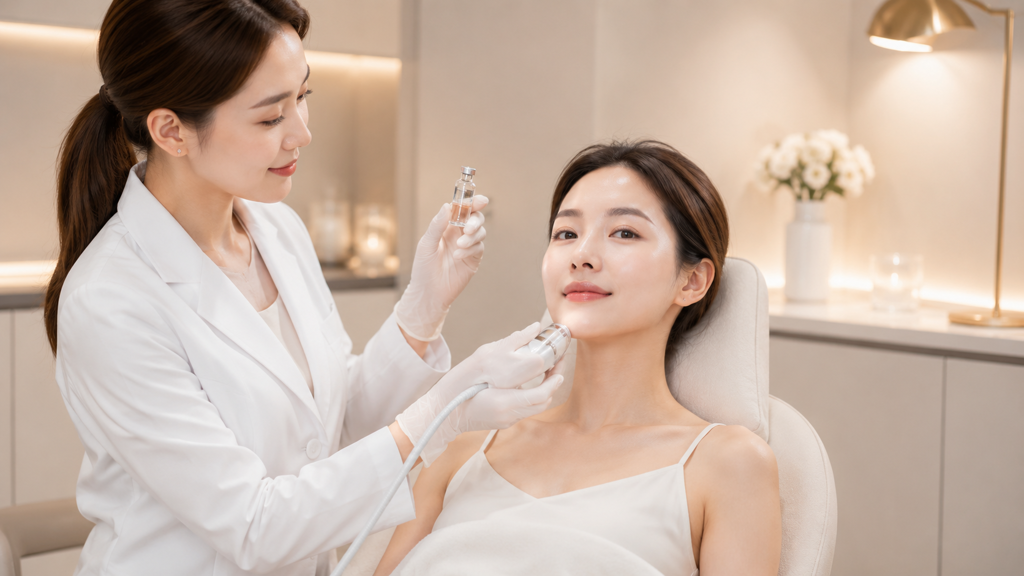
Stem cell aesthetic treatment is a non-surgical regenerative skin rejuvenation procedure that aims to support the skin's own repair and renewal environment, rather than adding volume or resurfacing the surface layer. At Return Clinic it sits within Dermatology, under Skin Rejuvenation & Regenerative Aesthetics.
Conventional cosmetic approaches ask how to cover, fill, or resurface what has changed. Regenerative approaches ask how to support the skin so it behaves more like healthier skin — suiting patients who want gradual, natural-looking improvement.
How does regenerative treatment differ from fillers, lasers, and surgery?
Injectable volume treatments, energy-based devices, and laser resurfacing all have well-established roles. Stem cell aesthetic treatment addresses a different objective: skin quality rather than structural volume or surface ablation. Patients who respond typically notice how their skin feels — smoother, more resilient, better hydrated — alongside how it looks.
Who Needs Stem Cell Aesthetic Treatment?
Candidacy is determined by skin condition and goals rather than age alone. The treatment suits patients whose main concern is skin quality — texture, firmness, tone, resilience — rather than significant structural laxity, which may be better addressed by other means. Consultation is always required before treatment is planned.
- Adults in their 30s to 60s noticing progressive skin ageing, where skin no longer recovers as it once did and fine lines persist rather than fade.
- Patients concerned about loss of firmness and elasticity in the cheeks, midface, and jawline, even where facial volume has not substantially changed.
- Patients with fine lines around the eyes, forehead, and mouth, particularly lines that look etched rather than purely dynamic.
- Patients with rough, uneven, or porous-looking texture, or textural irregularity following inflammatory skin conditions, subject to in-person assessment.
- Patients with dull, dehydrated, or fatigued-looking skin who find topical skincare alone no longer sufficient.
- Patients who prefer a regenerative, minimally invasive approach to surgery, or who are tired of frequent short-acting maintenance treatments.
Who may not be a suitable candidate?
Patients with active skin infection or inflammation in the treatment area, those pregnant or breastfeeding, patients with certain autoimmune or immunosuppressive conditions, and those taking medications affecting healing or bleeding may be advised to postpone or consider an alternative. Anyone with rapidly worsening skin changes or a suspicious lesion should seek medical evaluation first.
Meet the Specialist Behind Stem Cell Aesthetic Treatment at Return Clinic
Regenerative aesthetic medicine sits at the intersection of skin health and whole-body health, and Return Clinic's clinical structure reflects that.
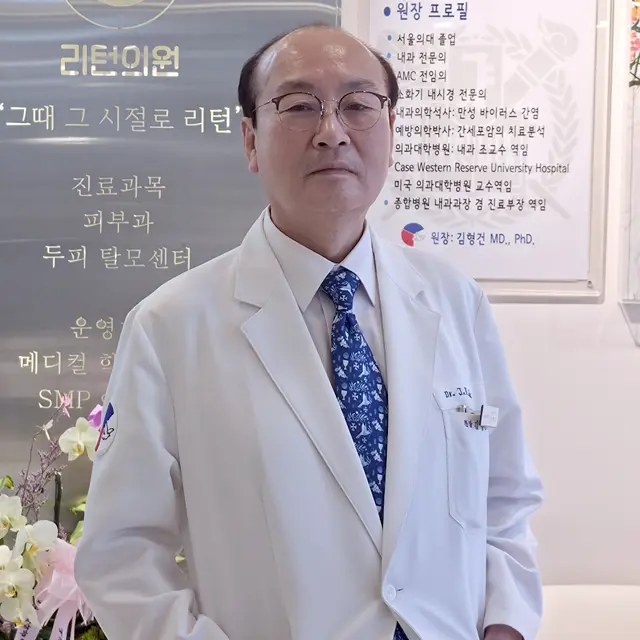
Dr. Hyung Geon Kim, M.D., Ph.D. — Medical Leadership
Dr. Kim is a board-certified Internal Medicine specialist and certified Gastrointestinal Endoscopy subspecialist of the Korean Society of Gastrointestinal Endoscopy. A graduate of Seoul National University College of Medicine, he holds a Master's in Internal Medicine researching chronic viral hepatitis and a Ph.D. in Preventive Medicine analysing hepatocellular carcinoma treatment. He completed fellowship training at Asan Medical Center and has served as Assistant Professor of Internal Medicine at a medical university hospital, Professor at Case Western Reserve University Hospital in the United States, and Chief of Internal Medicine and Medical Director of a general hospital.
His clinical specialties are gastroenterology and hepatology. Within the regenerative aesthetics programme his role is medical governance rather than hands-on aesthetic delivery — applying hospital-standard rigour and systemic health assessment to how protocols are reviewed and safety standards maintained.
Shared care philosophy: evidence-informed, conservative, and patient-centred — recommend regenerative treatment only when genuinely appropriate, explain honestly what it can and cannot achieve, and treat skin health as inseparable from overall health.
Stem Cell Aesthetic Treatment Areas and Expected Skin Improvements
Treatment is most commonly directed at facial skin, with additional areas included where clinically appropriate and confirmed at consultation.
- Forehead and glabellar region. This mobile area is often first to show fine horizontal lines and reduced smoothness. Sun exposure and repeated movement mean texture and resilience decline earlier here than expected. Treatment focuses on skin quality rather than restricting movement, preserving natural expression.
- Periorbital (under-eye and outer eye) area. The skin here is among the thinnest on the body and shows fatigue and crepey texture more readily than anywhere else. Patients often identify it as the reason they look tired regardless of rest. Planning is cautious, and improvements tend to be gradual and subtle.
- Cheeks and midface. The midface carries much of the visual weight of facial youthfulness, and reduced firmness here can make the face read as tired. Regenerative treatment targets the condition and resilience of the skin envelope itself. It is not volume replacement, and patients seeking structural change will be told so directly.
- Perioral area and lower face. Fine lines around the mouth and reduced jawline firmness are common from the forties onward, and both are influenced by skin quality rather than volume alone. Improvements typically present as a smoother, more even surface. Outcomes vary and are reassessed at follow-up.
- Neck, décolletage, and backs of the hands (where clinically appropriate). These areas receive heavy cumulative sun exposure but far less skincare attention, often leaving a visible mismatch with facial skin. Concerns usually involve thinning, texture, and tone rather than wrinkles. Inclusion is confirmed case by case.
Expected improvements: patients who respond well may notice gradual improvement in texture and smoothness, a firmer and more resilient feel, improved hydration, and softening of fine lines — typically over weeks rather than immediately. Results vary and no outcome is guaranteed; response depends on baseline skin condition, age, general health, lifestyle, sun exposure, and aftercare.
Stem Cell Aesthetic Treatment Process and Timeline: Step by Step

Assessment precedes planning, and planning precedes any procedure. Patients are not treated without prior evaluation.
- Medical consultation and skin assessment. A review of skin condition, aesthetic priorities, previous treatments, medical history, and medications — including honest discussion of cases where regenerative treatment is not the right option.
- Medical suitability review and treatment planning. Findings are reviewed against clinic protocols and a personalised plan developed, specifying treatment areas, intensity, and anticipated sessions. The stem cell–based preparation and delivery method are selected here according to individual circumstances.
- Pre-treatment preparation. The area is cleansed and prepared to protocol, and a topical comfort measure applied where appropriate. The clinician confirms the plan and obtains informed consent.
- The treatment session. The regenerative preparation is applied to the planned areas using the selected delivery method, under sterile technique. Patients are encouraged to communicate throughout so comfort can be managed.
- Immediate aftercare. Mild redness, warmth, or tightness is common and settles quickly. Written instructions cover avoiding intense heat, vigorous exercise, and direct sun for a defined period, plus gentle cleansing and sun protection.
- Follow-up review and monitoring. A follow-up appointment assesses how the skin has responded and whether further sessions are appropriate. Because change is gradual, response is evaluated over weeks rather than days.
How much downtime should I expect?
Most patients experience only mild, short-lived effects such as redness, slight swelling, or tenderness, and return to normal activities promptly. Some notice minor bruising, particularly around the eyes. Expected downtime is discussed at consultation.
Stem Cell Aesthetic Treatment Results, Safety, and Longevity
Results develop gradually, with most patients who respond describing progressive improvement over the weeks following treatment. How long improvement lasts varies and depends on baseline skin condition, age, general health, sun exposure, smoking status, skincare consistency, and whether maintenance sessions are undertaken. Return Clinic does not describe results from this treatment as permanent.
The approach to safety is deliberately conservative: suitability is assessed before treatment is planned, intensity is matched to the individual rather than maximised by default, and protocols are maintained under the governance of a hospital-trained, board-certified physician. Systemic health context — medications, chronic conditions, immune status — is relevant to safe planning, not incidental to it.
Is stem cell aesthetic treatment safe?
As with any procedure involving a breach of the skin barrier, potential side effects include redness, swelling, bruising, tenderness, temporary itching, and rarely infection at the treatment site. Serious complications are uncommon but possible, and no clinic can eliminate risk entirely. Patients should report unexpected pain, spreading redness, persistent swelling, discharge, or fever promptly and seek urgent care.
How many sessions will I need?
The number varies by individual and is determined by skin condition, goals, and initial response. Some patients are advised on a course spaced over several weeks; others suit a more limited plan. Any recommendation follows in-person assessment and does not replace individual medical advice.
Why Choose Return Clinic for Stem Cell Aesthetic Treatment and Regenerative Skin Care?
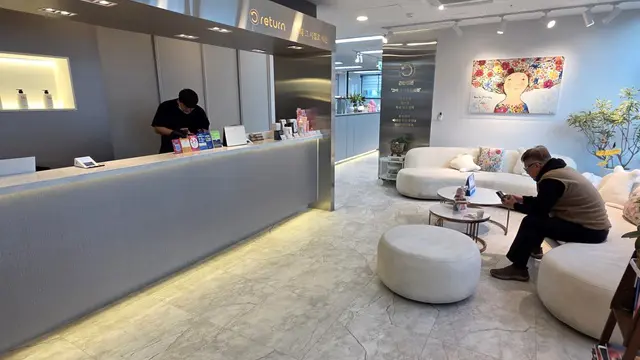
Return Clinic approaches regenerative aesthetics as medicine first. The distinguishing feature of the programme is the discipline around it — assessment before planning, planning before procedure, and honest discussion of what regenerative treatment can and cannot deliver.
That discipline is grounded in hospital-standard credentials. Medical governance is provided by Dr. Hyung Geon Kim, M.D., Ph.D., whose career spans Seoul National University College of Medicine, fellowship training at Asan Medical Center, professorial appointments at a medical university hospital and at Case Western Reserve University Hospital in the United States, and service as Chief of Internal Medicine and Medical Director. That background brings a whole-patient perspective to a field where skin is too often considered in isolation.
Clinic USPs:
- Physician-led medical governance from a board-certified Internal Medicine specialist with Ph.D.-level research training, ensuring protocols are reviewed against clinical rather than commercial standards.
- Conservative, assessment-first planning — patients are evaluated for suitability before any plan is developed, and told directly when treatment is not appropriate.
- Whole-health clinical perspective, so systemic health, medications, and underlying conditions factor into treatment planning.
- International-standard consultation and follow-up, informed by experience in Korean tertiary hospitals and a US university hospital setting.
Patient Experiences: Skin Rejuvenation Journeys with Stem Cell Aesthetic Treatment
The following are anonymised composite examples reflecting concerns commonly seen in regenerative skin rejuvenation. They are illustrative rather than accounts of specific individuals.
Skin Texture and Dullness, Late 30s
This patient described skin that looked persistently tired and no longer responded to her skincare routine, with rough texture visible in photographs. A plan focused on the cheeks and midface targeted skin quality rather than contour. At follow-up she reported smoother-feeling, less dull skin, describing the change as gradual.
Fine Lines and Loss of Firmness, Mid 50s
This patient's concerns were fine crepey texture around the eyes and loss of firmness across the lower face. Her medical history was reviewed carefully and a conservative plan structured across several sessions, with periorbital treatment planned cautiously. She described subtle improvement in skin resilience and softer fine lines.
Book Your Stem Cell Aesthetic Treatment Consultation at Return Clinic
Your skin deserves a plan built on assessment, not assumption — start with a consultation that tells you the truth about what regenerative treatment can do for you.
Primary CTA: Book your personalised stem cell aesthetic treatment consultation at Return Clinic today. During your 1:1 appointment, your skin condition and medical history will be reviewed in detail, your goals discussed openly, and a conservative, physician-supervised regenerative skin rejuvenation plan recommended only if it is genuinely appropriate for you — with realistic expectations explained clearly before you decide. [Request Your Consultation]
Secondary option: Prefer to speak with someone first? Call the Return Clinic patient coordination desk using the contact number listed on this page. Coordinators can answer questions about the procedure, consultation availability, and arrangements for international patients, and will connect you with the clinical team where a medical question requires it.
Individual clinical results and recovery timelines may vary depending on scalp/skin condition and personalized treatment planning. Temporary redness, mild swelling, or tenderness may occur following treatment.
Related Treatments
Explore additional hair restoration, scalp micropigmentation, and skin rejuvenation procedures at Return Clinic.

Liftera-A2 HIFU Lifting
Liftera-A2 HIFU lifting is a non-surgical skin tightening procedure that uses high-intensity focused ultrasound to deliver heat energy to precise depths beneath the skin surface.
Learn More

Medical SMP Hair Loss Care
Scalp micropigmentation occupies a distinct position and is not a substitute for medical or surgical hair-loss management.
Learn More

SMP Hairline
SMP hairline treatment applies this technique specifically to the frontal hairline — the area that frames the face and is usually the first thing both the patient and other people notice.
Learn More