Medical SMP, Stem Cell Hair Restoration & Skin Rejuvenation in Gangnam, Seoul · Multilingual Concierge
1:1 Personalized Care by Dr. Hyung Geon Kim, M.D., Ph.D.
en-US

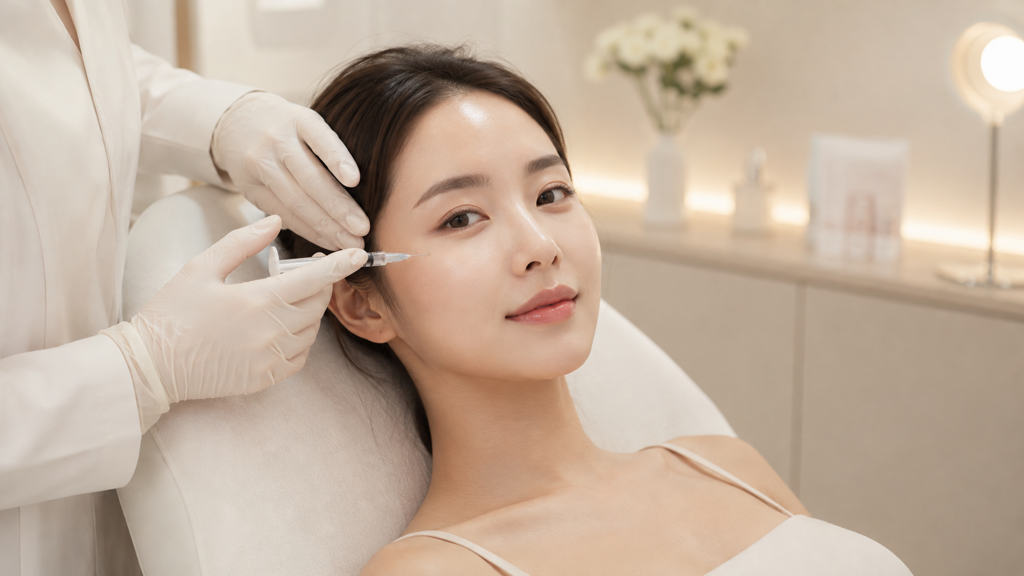
Skin Rejuvenation & Regenerative Aesthetics · Consultation Required
Skin Elasticity Injection
A skin elasticity injection is a minimally invasive dermatological treatment in which a rejuvenating solution is introduced into the skin through fine microinjections, supporting the skin's own firmness,…
Schedule a ConsultationWhat is a skin elasticity injection?
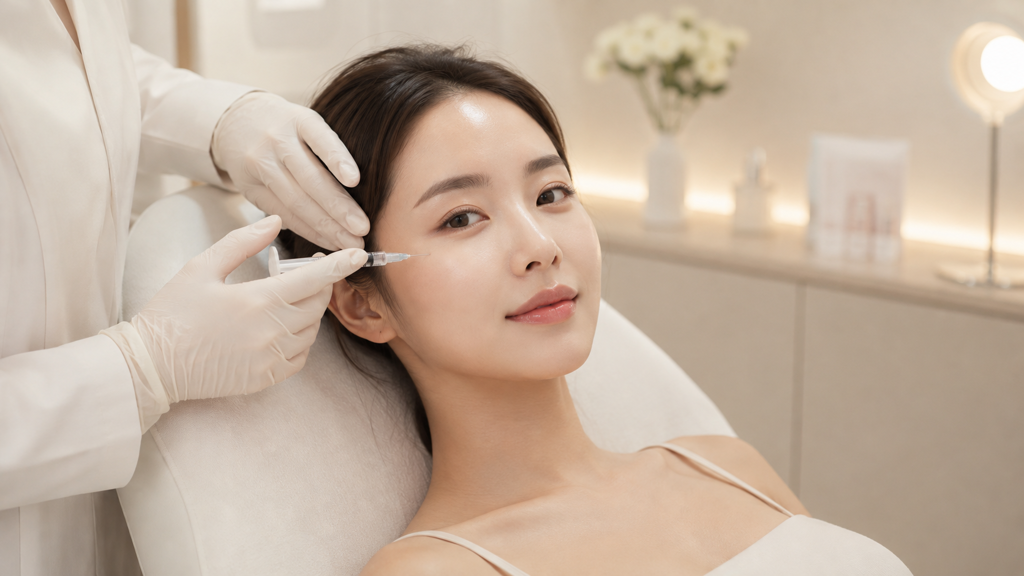
A skin elasticity injection is a minimally invasive dermatological treatment in which a rejuvenating solution is introduced into the skin through fine microinjections, supporting the skin's own firmness, resilience, and quality. Rather than reshaping the face or adding volume, it works at the level of skin quality itself — the bounce, smoothness, and hydration that skin gradually loses. It is performed under physician supervision, without incisions or general anaesthesia.
Skin elasticity depends on the tissue beneath the surface. Ageing, sun exposure, poor sleep, and rapid weight change leave that environment less resilient, so skin feels thinner and returns to shape more slowly. Treatment addresses this at the point of concern, distributing small quantities of solution evenly across the zone rather than concentrating it in one spot. Because skin responds cumulatively, it is delivered as a staged course, so the plan can be adjusted between sessions.
Volumising injectables contour facial compartments and surgical lifting repositions tissue. A skin elasticity injection is not a substitute for either — its focus is the condition of the skin itself.
Who Needs Skin Elasticity Injection Treatment?
This treatment suits patients whose concern is the condition of their skin rather than the shape of their face. Candidacy is decided after consultation, medical history review, and skin assessment — never on age or appearance alone.
- Adults in their 30s to 60s noticing loss of skin firmness, from skin settling slowly after expression to established laxity across the cheeks and jawline.
- Patients with crepey or thinning skin texture in delicate zones such as the under-eyes, neck, décolletage, or backs of the hands.
- Patients concerned about fine surface lines rather than deep folds, often related to skin quality rather than volume loss.
- Patients whose skin has changed after weight loss, illness, or prolonged stress, or looks dull despite consistent skincare.
- Patients who prefer a regenerative, non-surgical approach and are clear that they do not want surgery.
- Patients tired of short-lived results from superficial treatments, who want a natural change that leaves facial proportions unaltered.
Who may not be suitable: Patients with active skin infection or inflammation in the treatment area, uncontrolled systemic illness, certain bleeding disorders or anticoagulant regimens, known hypersensitivity to the solution, or who are pregnant or breastfeeding. Seek urgent care if severe pain, spreading redness, fever, or vision changes develop after any injectable procedure.
Meet the Specialist: Medical Leadership in Skin Rejuvenation & Regenerative Aesthetics
Return Clinic operates under formal physician leadership, with governance, screening standards, and protocols overseen by a senior medical specialist. Our position is that an injectable treatment — even a minimally invasive one — is a medical procedure and should be governed accordingly.
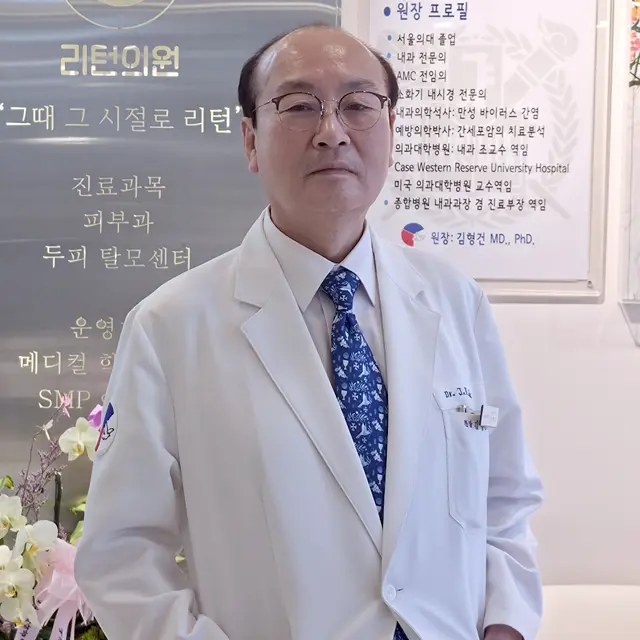
Dr. Hyung Geon Kim, M.D., Ph.D. — Medical Leadership
Dr. Kim is a board-certified Internal Medicine specialist and certified Gastrointestinal Endoscopy subspecialist with the Korean Society of Gastrointestinal Endoscopy. He holds an M.D. from Seoul National University College of Medicine, a Master's degree in Internal Medicine researching chronic viral hepatitis, and a Ph.D. in Preventive Medicine analysing hepatocellular carcinoma treatment. His career includes fellowship training at Asan Medical Center, a professorship at Case Western Reserve University Hospital in the United States, and senior roles as Chief of Internal Medicine and Medical Director at a general hospital.
Within our skin elasticity injection service, his role is medical oversight and patient safety rather than aesthetic technique: systemic health screening, review of medications and bleeding risk, identification of conditions that may affect healing, and clear escalation pathways if an adverse event occurs.
Treatment Areas and Expected Improvements
- Cheeks and mid-face: The most commonly treated zone, because reduced firmness shows in everyday interaction and in photographs. Patients often describe skin that feels less taut late in the day. Treatment is distributed evenly rather than targeting one point.
- Periorbital and under-eye skin: The thinnest skin on the face, and often where fine crepiness appears first. Because the area is delicate, it is approached with conservative volumes and careful placement. The goal is texture refinement, not correction of hollowing or pigmentation.
- Perioral area and jawline: Movement from speaking contributes to fine vertical lines around the mouth, while the jawline commonly loses firmness from the forties onward. Both need precise, small-volume placement. We distinguish between skin quality change, which this may address, and structural laxity, which it cannot.
- Neck and décolletage: These areas receive heavy sun exposure while getting far less skincare attention than the face, and often look older as a result. Fine horizontal lines and crepey chest texture are frequent reasons for enquiry, and usually need a staged course.
- Backs of the hands and inner upper arms: Hands are constantly visible yet rarely included in skincare, and the skin is thin and mobile over superficial tendons, so technique matters. Inner arms can lose resilience early after weight change. The aim in both is texture, not volume.
What improvements can patients expect?
Patients who respond well may notice skin that feels smoother, appears more even, and looks brighter, with subtle improvement in firmness and fine lines. Changes develop gradually across a course rather than after one session, and response varies with skin condition, age, sun exposure, general health, and aftercare. No result can be promised or guaranteed.
What to Expect From Your Skin Elasticity Injection Procedure

- Medical consultation and skin assessment: We discuss your concerns and goals, then review your medical history, medications, allergies, and previous reactions to injectables. Your skin is assessed in person for texture, hydration, and firmness.
- Treatment planning and informed consent: Suitable candidates receive a written plan covering areas treated, anticipated sessions, intervals, and realistic expectations. Risks, side effects, aftercare, and cost are explained beforehand, and you are never asked to decide on the day.
- Preparation and comfort measures: Target areas are cleansed under clinical conditions, and a topical anaesthetic may be applied beforehand, particularly for the under-eye area, neck, or hands.
- Microinjection delivery session: The solution is delivered through fine microinjections across the mapped zone. Most patients describe brief, repeated pinpricks. Appointment length depends on how many areas are treated.
- Immediate aftercare: Small raised points and mild redness are common and usually settle within hours to a day. Keep the area clean and avoid makeup, saunas, hot baths, and intense exercise for a day or two, with sun protection throughout.
- Course completion and follow-up: Treatment is delivered as a course spaced across several weeks, with scheduled review to assess response and adjust the plan. Visible change, where it occurs, emerges progressively rather than after one session.
Downtime: Mild swelling or small bruising may last a few days; most patients return to normal activity the same day.
Results, Safety, and Longevity
How long do results last? This treatment does not produce permanent change. Skin continues to age, and any improvement is gradual in onset and finite in duration. Where patients notice benefit, it develops across a course and is maintained through periodic repeat treatment. Any timeframe discussed in consultation is an estimate, not a guarantee.
Safety profile and our conservative approach: This is a minimally invasive procedure with a generally favourable safety profile when performed in a clinical setting, on appropriately screened patients, using sterile technique. We favour conservative dosing, thorough screening, and documented follow-up. Under Dr. Kim's governance, systemic health, medications, and bleeding risk are reviewed before treatment is approved.
Possible side effects: Common temporary effects include redness, small raised injection points, mild swelling, tenderness, and bruising, usually resolving within days. Less commonly, prolonged swelling, small firm areas at injection sites, or temporary discolouration occur. Infection, allergic reaction, and other serious complications are rare but possible. Seek urgent care immediately for severe or worsening pain, spreading redness, fever, skin blanching, or any change in vision. This page is educational information only, not a substitute for professional medical assessment.
Why Choose Return Clinic for Skin Elasticity Injection Treatment?

Return Clinic approaches skin rejuvenation as medical practice, not a retail service. Our programme operates under the governance of a senior physician whose career was built in hospital internal medicine, academic teaching, and departmental leadership — shaping how we screen, document, and follow up.
That translates into differences patients experience directly: a consultation in which suitability is assessed rather than assumed, routine review of medications and bleeding risk, and staged conservative plans with built-in review points rather than fixed packages sold in advance. If a skin quality treatment will not achieve what you hope for, we will tell you so. We are also equipped to care for international patients.
Clinic USPs:
- Physician-led clinical governance: Screening standards, protocols, and escalation pathways established under Dr. Hyung Geon Kim, M.D., Ph.D., a board-certified Internal Medicine specialist with hospital leadership and academic experience.
- Conservative, assessment-first philosophy: We treat only what warrants treatment, with candidacy determined in person and dosing deliberately conservative.
- Structured follow-up as standard: Every course includes scheduled review, written aftercare instructions, and a defined route to contact us between appointments.
- Care designed for international patients: Clear communication and realistic guidance on planning treatment around travel dates.
Patient Experiences: Skin Elasticity Injection Treatment Stories
The following are anonymised composite examples reflecting concerns commonly discussed at our clinic. They are illustrative, not verified testimonials. Results vary and no outcome is guaranteed.
Skin Texture and Firmness Patient, Late 40s
She described skin across her cheeks and jawline that felt looser than a few years earlier, and was clear she did not want surgery. A staged course was planned, and by its end she described her skin as feeling smoother.
Neck and Décolletage Patient, 50s
Her concern was that her neck and chest looked older than her face, with fine horizontal lines first noticed in photographs. After medication review, a plan across both areas was delivered over several sessions, and she reported smoother texture at final review.
Ready to Understand What Your Skin Actually Needs?
If your skin has started to feel less firm, less smooth, or less resilient than it once did, the most useful next step is a proper clinical assessment rather than a guess.
Primary CTA: [Book Your Skin Elasticity Injection Consultation] Schedule a private, physician-supervised consultation at Return Clinic to have your skin professionally assessed, discuss whether a skin elasticity injection procedure suits your individual condition and goals, review the process, timeline, recovery, risks, and costs in full, and receive a personalised staged plan with written aftercare guidance and structured follow-up — with no obligation to proceed on the day.
Secondary option: Call our Patient Coordination Desk Speak with our patient coordination team to check availability, ask about the treatment process, or arrange scheduling around international travel dates. Interpretation support can also be arranged.
Individual clinical results and recovery timelines may vary depending on scalp/skin condition and personalized treatment planning. Temporary redness, mild swelling, or tenderness may occur following treatment.
Related Treatments
Explore additional hair restoration, scalp micropigmentation, and skin rejuvenation procedures at Return Clinic.

Liftera-A2 HIFU Lifting
Liftera-A2 HIFU lifting is a non-surgical skin tightening procedure that uses high-intensity focused ultrasound to deliver heat energy to precise depths beneath the skin surface.
Learn More

Medical SMP Hair Loss Care
Scalp micropigmentation occupies a distinct position and is not a substitute for medical or surgical hair-loss management.
Learn More

SMP Hairline
SMP hairline treatment applies this technique specifically to the frontal hairline — the area that frames the face and is usually the first thing both the patient and other people notice.
Learn More